Quran- Word of God or Muhammad ?

Mukto-mona (Collection)

This article is mainly focused to show that when we read some of the verses in Quran, we clearly understand that those were Muhammad's own word, not Allah's.

According to the Muslims the Quran contains the words of God. Quran is to be read as if God Himself had spoken these words stated in it. It is important to emphasize this point because if Quran is the word of God then it should not contain any errors and it should hold true for all times. However, such is not the case.

He we will see how some of the content of the verses in the Quran clearly shows that these words were obviously spoken by Muhammad and Not God.

Let's start with the opening Sura of Quran.

The Opening Sura Fatihah:
(Quran 1:1-7)

In the name of the Merciful and Compassionate God.
Praise belongs to God,
The Lord of the worlds, the merciful, the
compassionate, the ruler of the day of
the day of judgment! Thee we serve and Thee
we ask for aid. Guide us in the right path,
the path of those Thou art gracious to;
not to those Thou art wroth with, nor of
those who err.

Someone need not be a rocket-scientist to comprehend that these words are clearly addressed to God, in the form of a prayer. They are Muhammad's words of praise to God ("Guide us in the right path,..." ~ 001.006), asking for God's help and guidance. Some Muslim compilers conveniently add the imperative "say" in the English translation of the Quran at the beginning of the sura to remove this difficulty. This imperative form of the word "say" occurs at least 350 times in the Quran, and its obvious that this word has, in fact, been inserted by later compilers of the Quran to remove countless similarly embarrassing difficulties. Thus, we have direct evidence that the Quran starts out with the words of Muhammad.

Let us see some other examples in Quran:

(Quran 113:1)
I take refuge with the Lord of the Dawn.

One can clearly see, its Muhammad and NOT GOD HIMSELF who is seeking refuge in God.


(Quran 6:104)

Now have come to you, from your Lord, proofs
(To open your eyes): If any will see, it will
be for (the good of) his own soul; If any will
be blind, it will be to his own (harm): I am not
(here) To watch over your doings.

In this verse the speaker of the line "I am not to watch over your doings"- is clearly Muhammad. In fact Dawood in his translation adds a footnote that the "I" refers to Muhammad here. And in previous verse (Quran 6:103) it is stated - 'No mortal eyes can see Him, though He sees all eyes. He is benignant all knowing'. R. Bell said in his "A commentary on the Quran (Manchester, England: Victoria university of Manchester, 1991) vol. 1. p. 201 '-  The end of the verse shows that Phrophet is speaking his own words'.

(Quran 27:91)
For me, I have been commanded to serve the
Lord of this city, Him Who has sanctified it
and to whom (Belong) all things; and I am
commanded to be of those who bow in Islam to
Allah's Will

Again, the speaker here is clearly Muhammad who is trying to justify puning the Meccans who were not willing to follow Muhammad's Islamic version of God. Dawood and Pickthall both interpolate "say" at the beginning of the sentence which is lacking in the original Arabic version of the sura.

(Quran 81:15)
So verily I call to witness the planets - that recede...

Again, here it is Muhammad and NOT God who is swearing by the turning planets.


(Quran 84:16-19)
I swear by the afterglow of sunset, and by the night, and by the moon when she is at the full.

Once again it is Muhammad and NOT God. He is unable to disguise his pagan heritage. (Omnipotent Allah should not swear, right?) Muhammad  swears again in the name of the Sun and Moon, both of which were considered as holy deities by pre-Islamic Arabs. (Dear Readers, have you noticed that YUSUFALI cleverly escaped the word "swear" while making the translation, but PICKTHAL and SHAKIR used it).

(Quran 6:114)
Should I seek other judge than God, when
it is He who has sent down to you, the
distinguishing book (Quran)?

Any sane person can comprehend that those words are not spoken by God but Mohammed himself. Yusuf Ali in his translation adds at the beginning of the sentence "say", which is not there in the original Arabic and he does so without comment or footnote. 

Do we need to give any other further evidence that Quran actually contains the words of Muhammad, not Allah ! Interested readers, may also check sura 19:9, 19:64, 37:164-166, 51:50, 53:2, 70:40-41, 86:17 to understand that those can be uttered by anybody but Allah. </


Subscribe for Free Ezine
Enter your Email:
Subscribe for Printed Magazine: Subscription Rates are $35/year
Search the web using keywords

) ) ) ) ) ) ) ) ) ) ) ) ) ) ) ) ) ) ) ) ) ) ) ) ) ) ) ) ) ) ) ) ) ) ) ) ) ) ) ) ) ) ) ) ) ) ) ) ) ) ) ) ) ) ) ) ) ) ) ) ) ) ) ) ) ) ) ) ) ) ) ) ) ) ) ) ) ) ) ) ) ) ) ) ) ) ) ) ) ) ) ) ) ) ) ) ) ) ) ) ) ) ) ) ) ) ) ) ) ) ) ) ) ) ) ) ) ) ) ) ) ) ) ) ) ) ) ) ) ) ) ) ) ) ) ) ) ) ) ) ) ) ) ) ) ) ) ) ) ) ) ) ) ) ) ) ) ) ) ) ) ) ) ) ) ) ) ) ) ) ) ) ) ) ) ) ) ) ) ) ) ) ) ) ) ) ) ) ) ) ) ) ) ) ) ) ) ) ) ) ) ) ) ) ) ) ) ) ) ) ) ) ) ) ) ) ) ) ) ) ) ) ) ) ) ) ) ) ) ) ) ) ) ) ) ) ) ) ) ) )

Bookmark and Share

Text Size:   A | A | A | A

Vol. 7 / Issue 46 / June 3 2004

Contents of this issue

Editorial Download Palm Doc format
Why Quran is not the Word of God? Part 7 Download Palm Doc format


News Items (Common to all issues) :
Standing in the Gap - Fasting prayer on 9th Aug 2011
Download Articles in Handheld Computers
Please Join us in "Peace Prayer Room"
Your Spam Folder
Hindi / Malayalam/Tamil Bible Online
Through the Valley of Death
Free Tutorials for your Kids!
Allah and Elohim - Are they the same God? Book
Free E-Cards
Online Games for you!


Editorial

By Sherly Isaac

Today our churches are deteriorating. The standard of our churches are continually declining. Those things which we call as illegal activity or crime is now being openly committed by pastors and even Bishops of our churches. Did Jesus intend to have this type of church filled with criminals, and beaten down people? If Jesus comes back today, will He be able to take them with Him? I think not.

Bible says in Eph 5:25-27, "Husbands, love your wives, just as Christ also loved the church and gave Himself for her, that He might sanctify and cleanse her with the washing of water by the word, that He might present her to Himself a glorious church, not having spot or wrinkle or any such thing, but that she should be holy and without blemish."

The above verse talks about the love of God for His bride that is Church. Jesus gave His life so that He could sanctify and cleanse His bride and present her to Himself a glorious church, spotless, holy, without blemish and wrinkle free. Do our Churches have these qualities? In my whole life I have never seen in any marriage a beaten down bride wearing filthy dress, hairs pulled out, without any proper makeup or without any preparation. If a bride needs to pay this much attention so that on her wedding she would look beautiful and adorable, how much more preparation would be needed for Christ's bride? But today our churches have taken it very lightly. They think that no matter what their performance may be, they could somehow be His bride on the great wedding day.

The other day I was watching news on TV. They showed some gay people who were wearing tricolor bands as a mark of protest and were protesting inside the church demanding equal status or rights in Church. Instead of leaving their sin they want to live with sin and at the same time they want equal rights in the congregation. How pathetic it is!

This is the story of laymen but the most amazing thing is that many Pastors and Bishops are also indulging in criminal activities. There is a group called UCMC-NA (UNION of the CSI Malayalam Congregations of North America). Just two years back this group was formed by one Bishop, three or four pastors and a handful of CSI (Church of South India) members. What these people did was most deplorable. They tried to hijack the whole Church of South India which is the largest church in India, which was founded almost sixty years back. Church of South India has more than 3.8 million members around the world and 14,000 congregations in 21 dioceses. These few people of UCMC registered the logo and the name of the CSI Church with the trademark office and they pretended as if they are the main CSI Church thereby trying to steal the name and logo of the established Church. Those who raised their voice against UCMC, are being threatened.

Did Jesus really intend to have this type of Church where people are indulging in illegal activities? No, Jesus is coming to take His beautiful, glorious, holy and spotless bride. Will you find yourself worthy to stand with Him in the wedding of the Lamb? If your answer is no, you need to repent from your sins and turn to God so that He could cleanse you and make you whole.


Why Quran is not the Word of God? Part 7

By Sherly Isaac

Last week we meditated on the purpose of scripture writings. We looked in detail that Bible was written to correct the sinful human beings and to bring them in their original position from where they fell. But there is no forgiveness of sin, salvation of soul, fellowship with God or eternal life ever offered in Quran or in Hadith

Is Quran infallible?:

Muslim scholars have argued that, Word of God should not contain any error thus Quran is infallible and does not contain any error. But it is not true. Quran contains major mistakes which makes Quran's validity in question.

Some of the contradiction in Quran:
Quran sometimes condemns sin but on the other side gives green flag to commit wrong things.

Quran says in Surah 17:32-34. "Nor come nigh to adultery: for it is a shameful (deed) and an evil, opening the road (to other evils). Nor take life - which Allah has made sacred - except for just cause. And if anyone is slain wrongfully, we have given his heir authority (to demand qisas or to forgive): but let him nor exceed bounds in the matter of taking life; for he is helped (by the Law). Come not nigh to the orphan's property except to improve it, until he attains the age of full strength; and fulfil (every) engagement, for (every) engagement will be enquired into (on the Day of Reckoning)."

But in Quran itself you can find that adultery is permitted as we read in Surah 2:230. "So if a husband divorces his wife (irrevocably), He cannot, after that, re-marry her until after she has married another husband and He has divorced her. In that case there is no blame on either of them if they re-unite, provided they feel that they can keep the limits ordained by Allah. Such are the limits ordained by Allah, which He makes plain to those who understand."

We see that Muhammad was willing to marry his adopted son's wife. So Allah permitted him by changing the rules as we read in Surah 33:50, "O Prophet! We have made lawful to thee thy wives to whom thou hast paid their dowers; and those whom thy right hand possesses out of the prisoners of war whom Allah has assigned to thee; and daughters of thy paternal uncles and aunts, and daughters of thy maternal uncles and aunts, who migrated (from Makka) with thee; and any believing woman who dedicates her soul to the Prophet if the Prophet wishes to wed her;- this only for thee, and not for the Believers (at large); We know what We have appointed for them as to their wives and the captives whom their right hands possess;- in order that there should be no difficulty for thee. And Allah is Oft- Forgiving, Most Merciful."

Killing innocent people is permitted in Surah 4:89. They but wish that ye should reject Faith, as they do, and thus be on the same footing (as they): But take not friends from their ranks until they flee in the way of Allah (From what is forbidden). But if they turn renegades, seize them and slay them wherever ye find them; and (in any case) take no friends or helpers from their ranks;-

Quran tells us that Mary the mother of Jesus was sister of Aaron as we read in Surah 19:28. "O sister of Aaron! Thy father was not a man of evil, nor thy mother a woman unchaste!" If we read further we can understand that it was spoken about Jesus' mother Mary Surah 19:34. Such (was) Jesus the son of Mary: (it is) a statement of truth, about which they (vainly) dispute.. And Surah 66:12 says, "And Mary, daughter of Imran, whose body was chaste, therefore We breathed therein something of Our spirit. And she put faith in the words of her Lord and His Scriptures, and was of the obedient."

Aaron who was the brother of Moses was not the sister of Mary because Mary came many thousands of years later and she was also not the daughter of Imran.

Some Surahs tell us that Jesus died but some deny the death of Jesus on the cross. We read in Surah 19:33. "So peace is on me the day I was born, the day that I die, and the day that I shall be raised up to life (again)"! But in Surah 4:157. "That they said (in boast), "We killed Christ Jesus the son of Mary, the Messenger of Allah.;- but they killed him not, nor crucified him, but so it was made to appear to them, and those who differ therein are full of doubts, with no (certain) knowledge, but only conjecture to follow, for of a surety they killed him not."

By all these things you can understand that Quran has so many misconception and mistakes which should not be there if it came directly from God or if it was word of God. Unlike Quran, Bible does not contain such mistakes though Bible was written by 40 different prophets and apostles during different time period. Bible's message is consistant and it never contradicts the theme and message of the Bible.


Standing in the Gap - Fasting prayer on 9th Aug 2011

As the Bible says in Ezekiel 22:30 "So I sought for a man among them who would make a wall, and stand in the gap before Me on behalf of the land, that I should not destroy it." And also the Bible says in Numbers 16:48, "And he (Aaron) stood between the dead and the living; so the plague was stopped." We have fasting prayer every second Tuesday of each month. Our next fasting prayer meeting will be conducted on 9th Aug 2011

Download Articles in Handheld Computers

You can now download articles in Palm Doc format for your palm handheld computer. It will work with any devise that has Palm OS and Palm Doc Reader installed. To download click on the link named "Palm Doc Format" i.e. at the top of this page by the side of each articles.

Please Join us in "Peace Prayer Room"

If you have any prayer request please join us any time at our New Chat Room at http://insearchofpeace.org/prayer If any of us available in prayer room, we will be praying online otherwise you can email your prayer request to feedback@insearchofpeace.org

Your Spam Folder

If you are getting this newsletter in your bulk/junk/Spam folder please hit the "not junk" or "not spam" button so that you could receive it in your mailbox. Also adding feedback@insearchofpeace.org email address into your contact list can avoid this email from ending up in your bulk folder.

Hindi / Malayalam/Tamil Bible Online

Now you can read Bible in Hindi online at http://www.hindibible.org
in Malayalam online at http://www.malayalambible.org
in Tamil online at http://www.hindibible.org?ver=tamil

Through the Valley of Death

As many of you know that in the year 2005, our dad was very sick even unto death. God miraculously healed him. We have compiled it in a book form. I sure believe that it will inspire you and encourage you greatly.

This book is available for purchase at JasmineCorp Store

Free Tutorials for your Kids!

Now you can learn Graphics and web designing online. These tutorials are free but you may need to get login ID by registering yourslef. Currently tutorials for Paint Shop Pro, HTML and Dreamweaver/Fireworks are available but in future more tutorials will be added.

Check the tutorials at:http://jasminecorp.net/tutorial

Allah and Elohim - Are they the same God? Book

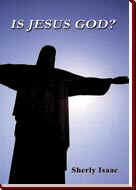
Now available "Allah and Elohim - Are they the same God" Available at JasmineCorp Store, and "Is Jesus God?" Available at JasmineCorp Store,

Both books compares the Bible and the Quran and read eye opening facts about Jesus, God of the Bible, Allah and Islamic faith. I am sure that you want to read this.

Also read:
Book Title: Is Jesus God?
Author: Sherly Isaac
ISBN: 0759628092
http://insearchofpeace.org/books.htm

Free E-Cards

Send free E-Cards (Greeting Cards) to your friends and family. Its an easy way to stay in touch with friends and family. The website address is:
http://ecards.jcsearch.com

Online Games for you!

Now you can play games online at http://insearchofpeace.org/games


Subscribe for English Edition please Click here.
Subscribe for Malayalam Edition please Click here
Subscribe for Tamil Edition please Click here.

Home || Magazine Rack 1, 2, 3, 4, 5, 6, 7 8 9 10 11 12 13 14 || Malayalam Rack 1, 2, 3 || Tamil Rack
Subscribe || Prayer Request || Contact us


Search Bible:

(eg. John 3:16-20)

Send an Invitation to your friend to visit this page
Your Name     : Your Email     :
Friend's Name : Friend's Email :


Sponsored and Technology Provided by Jasmine Computers Inc


Local News: India 

 | 

Sign Up

 | 

Sign In

THE QURAN IS NOT WORD OF GOD, here is proof

Posted in the Islam Forum

Ads by Google
How to Convert to Islam - How to convert and become a Muslim with Live Help by chat
www.IslamReligion.com
Nabulsi Encyclopedia - The true nature of Islam & Main topics in the Islamic world
www.nabulsi.com/en

Read

278 Comments

More Islam Discussions »

Comments

Showing posts 1 - 20 of278
< prev page
|
Go to last page| Jump to page:

“montel”

Since: Dec 06

SINGAPORE

|
Report Abuse
|
Judge it!
|
#2
Aug 15, 2007
 

Judged:

2

2

1

Yahaim wrote:
Bukhari:V4B56N814
"There was a Christian who embraced Islam and he used to write the revelations for the Prophet. Later on he returned to Christianity again he used to say:‘Mohammad knows nothing but what I have written for him.'"
This verse could confirm he was a self-declared prophet, an impostor.
FAKE AND IMPOSTOR WAS MOHAMMED AND MUSLIMS WILL SPIT ON HIS GRAVE.
Islam is one huge scam created to enslave people to lies and false surahs.
dont stop there Jews,dont make yor own interpretation of the hadith,for everyone's sake it should read:

Volume 4, Book 56, Number 814:
Narrated Anas:

There was a Christian who embraced Islam and read Surat-al-Baqara and Al-Imran, and he used to write (the revelations) for the Prophet. Later on he returned to Christianity again and he used to say: "Muhammad knows nothing but what I have written for him." Then Allah caused him to die, and the people buried him, but in the morning they saw that the earth had thrown his body out. They said, "This is the act of Muhammad and his companions. They dug the grave of our companion and took his body out of it because he had run away from them." They again dug the grave deeply for him, but in the morning they again saw that the earth had thrown his body out. They said, "This is an act of Muhammad and his companions. They dug the grave of our companion and threw his body outside it, for he had run away from them." They dug the grave for him as deep as they could, but in the morning they again saw that the earth had thrown his body out. So they believed that what had befallen him was not done by human beings and had to leave him thrown (on the ground).

only god forsaken people would ridicule another religion for his/her selfish cause!and thats Yahaim

“montel”

Since: Dec 06

SINGAPORE

|
Report Abuse
|
Judge it!
|
#3
Aug 15, 2007
 

Judged:

2

2

1

Yahaim wrote:
Bukhari:V4B56N814
"There was a Christian who embraced Islam and he used to write the revelations for the Prophet. Later on he returned to Christianity again he used to say:‘Mohammad knows nothing but what I have written for him.'"
This verse could confirm he was a self-declared prophet, an impostor.
FAKE AND IMPOSTOR WAS MOHAMMED AND MUSLIMS WILL SPIT ON HIS GRAVE.
Islam is one huge scam created to enslave people to lies and false surahs.
while this is not a false hadith,read this Yahaim:
The Hadith of Sahih Muslim, Book 041 (Kitab Al-Fitan wa Ashrat As-Sa'ah), Number 6985, states:

Abu Huraira reported Allah's Messenger (may peace be upon him) as saying: The last hour would not come unless the Muslims will fight against the Jews and the Muslims would kill them until the Jews would hide themselves behind a stone or a tree and a stone or a tree would say: Muslim, or the servant of Allah, there is a Jew behind me; come and kill him; but the tree Gharqad would not say, for it is the tree of the Jews.

“Peace is Islam”

Since: Mar 07

London, Canada

|
Report Abuse
|
Judge it!
|
#5
Aug 15, 2007
 
PEGUAM TERROR wrote:
<quoted text>
while this is not a false hadith,read this Yahaim:
The Hadith of Sahih Muslim, Book 041 (Kitab Al-Fitan wa Ashrat As-Sa'ah), Number 6985, states:
Abu Huraira reported Allah's Messenger (may peace be upon him) as saying: The last hour would not come unless the Muslims will fight against the Jews and the Muslims would kill them until the Jews would hide themselves behind a stone or a tree and a stone or a tree would say: Muslim, or the servant of Allah, there is a Jew behind me; come and kill him; but the tree Gharqad would not say, for it is the tree of the Jews.
your a smart person...you can look up the whole story as to how Muslims would end up slaying Jews. I would explain it to you, but alas I have no time nor effort to do so. Just type in "Dijal" in google and you will see the entire story about the war against Jews...

“montel”

Since: Dec 06

SINGAPORE

|
Report Abuse
|
Judge it!
|
#6
Aug 15, 2007
 

Judged:

4

4

3

Yahaim wrote:
The thing is that Mohammed never wrote anything because He was Illiterate and this christian man wrote everything for him.
That probes that the Quran is a copy of the Christian Bible.
ya right,like as if Jesus wrote the Bible,
it proves nothing man!it just proves how people like u r just plain bias.If u are all out for peace,this is not the way to create/moot the feeling of peace ,its the opposite,u r just the fuel of hatred among Christians and Muslims.Yor bigoted assumption r just plain rude!
Ex Aithiest Now Muslim

Lahore, Pakistan

|
Report Abuse
|
Judge it!
|
#8
Aug 16, 2007
 

Judged:

6

4

3

If you are so sure you are telling the truth Yahaim take a oath by the God of Abraham and Moses that Muhammad was not a true prophet of God and the curse of God be upon you and your family if Muhammad was Gods prophet.
Do you care to take this oath?
aesthetic

Saint Albans, WV

|
Report Abuse
|
Judge it!
|
#9
Aug 16, 2007
 

Judged:

4

4

1

PEGUAM TERROR wrote:
<quoted text>
ya right,like as if Jesus wrote the Bible,
it proves nothing man!it just proves how people like u r just plain bias.If u are all out for peace,this is not the way to create/moot the feeling of peace ,its the opposite,u r just the fuel of hatred among Christians and Muslims.Yor bigoted assumption r just plain rude!
Well let's see. The name Jesus/Jehoshua means God's salvation. The Bible teaches that Jesus was/is God's Word sent back to earth in human form. The Bible teaches that it is through God's Word that the human race can have salvation and a relationship with the Creator. The Bible teaches that it contains the Word of God. Jesus= The Word of God= THe Holy Bible. Pretty interesting, huh?
ABC

Riyadh, Saudi Arabia

|
Report Abuse
|
Judge it!
|
#10
Aug 18, 2007
 

Judged:

6

5

3

BASTARD U DON'T KNOW ABOUT ISLAM SO DON'T SPEAK ABOUT ISLAM
WU_CHOU_LI

Eugene, OR

|
Report Abuse
|
Judge it!
|
#12
Aug 21, 2007
 

Judged:

6

5

2

I KNOW MORE ABOUT ISLAM THAN ANY MUSLIM. MY PARENTS WERE MUSLIMS UNTIL THEY BECAME EDUCATED AND LEARNED TO READ AND READ THE LIES IN THE QURAN AND LEFT ISLAM... THERE IS NOT EVEN ONE SINGLE TRUTH IN ISLAM. EXAMPLES->-> "AND WHEN HE REACHED THE PLACE WHERE THE SUN SET, HE FOUND IT GOING DOWN IN A MUDDY SPRING" AURA 18:86... "MAN IS CREATED FROM A DROP EMITTED FROM BETWEEN THE BACKBONE AND RIBS" SURA 86:5-7 ..... MAN IS CREATED FROM A GERM" SURA 76:2.... I GUESS ALLAH THINKS MAN IS CREATED FROM BACTERIA........."MAN IS CREATED FROM MUD" SURA 15:26..... "MAN IS CREATED FROM A BLOOD CLOT" SURA 96:2.... SEE? THE QURAN IS FULL OF LIES LIKE THAT.
Sign up for Top Picks deals email
WU_CHOU_LI

Eugene, OR

|
Report Abuse
|
Judge it!
|
#13
Aug 21, 2007
 

Judged:

5

5

1

THE QURAN SAYS THAT "ABRAHAM LIVED IN THE MECCA VALLEY" IN SURA 14:37 (ABRAHAM WAS BORN IN UR AND LIVED IN HEBRON ISRAEL).... "ABRAHAMS FATHERS NAME WAS AZAR" SURA 6:74..(ABRAHAMS FATHERS NAME WAS TERAH).... "PHAROAHS WIFE ADOPTED MOSES" SURA 28:8-9..(MOSES WAS ADOPTED BY PHAROAHS DAUGHTER)
SEE? THERE IS NOT BUT ONE SINGLE TRUE STATEMENT IN THE QURAN AND THAT WAS WHEN THE PEOPLE OF NOAH SAID THAT MOHAMMED WAS A LIAR AND WAS INSANE IN SURA 54:2-9... THE QURAN READS LIKE IT WAS WRITTEN BY A 5 YEAR OLD..... ALL LIES.... NO TRUTH
WU_CHOU_LI

Eugene, OR

|
Report Abuse
|
Judge it!
|
#14
Aug 21, 2007
 

Judged:

5

5

2

THE REASON THAT IT IS THE DEATH PENALTY TO QUESTION ISLAM IS BECAUSE IT CANNOT STAND UP TO SCRUTINY.
WU_CHOU_LI

Eugene, OR

|
Report Abuse
|
Judge it!
|
#16
Aug 21, 2007
 

Judged:

5

5

2

MOHAMMED SAID THAT "THE HUMAN BODY HAS 360 JOINTS" IN KATAB AL-ZAKAT, BOOK 005 NUMBER 2199 AND KATAB AL-ADAB, BOOK 41 NUMBER 5222...... THE HUMAN BODY HAS ONLY 206 BONES, MAKING 360 JOINTS IMPOSSIBLE.... PROOF THAT MOHAMMED WAS AN IDIOT AND A FAKE.
WU_CHOU_LI

Eugene, OR

|
Report Abuse
|
Judge it!
|
#17
Aug 21, 2007
 

Judged:

5

5

1

AFTER MOHAMMED DIED, HE WAS EATEN BY DOGS AND TURNED INTO DOGGIE DO DO. GOD WOULD NEVER ALLOW A TRUE PROPHET TO BE EATEN BY DOGS. ALSO, ALL TRUE PROPHETS PERFROMED MIRACLES IN VIEW OF THOUSANDS BUT MOHAMMED FAILED EVERY SINGLE TIME HE TRIED TO PERFORM A MIRACLE.
WU_CHOU_LI

Eugene, OR

|
Report Abuse
|
Judge it!
|
#18
Aug 21, 2007
 

Judged:

5

5

2

THERE IS NOT EVEN ONE SINGLE SCIENTIFIC FACT IN THE QURAN AND NO MIRACLES.... NONE, NADA, ZIP, ZERO!
WU_CHOU_LI

Eugene, OR

|
Report Abuse
|
Judge it!
|
#19
Aug 21, 2007
 

Judged:

5

5

4

HERES A GOOD ONE->->-> "THE SUN RIDES IN A CHARIOT CARRIED BY 360 ANGELS" TABARI 1:244
Dan

Bellevue, WA

|
Report Abuse
|
Judge it!
|
#20
Aug 21, 2007
 

Judged:

5

5

2

Muhammed was an insane LUNATIC. Isla is based on lies, just like the Nazi's.
WU_CHOU_LI

Eugene, OR

|
Report Abuse
|
Judge it!
|
#21
Aug 21, 2007
 

Judged:

5

5

4

"ALLAH CREATED 2 SUNS AND THEN CHANGED ONE SUN INTO THE MOON WITH ITS OWN LIGHT" TABARI 1;233... SEE HOW SILLY ISLAM IS?.... "ALLAH CREATED ALL WOMEN STUPID" TABARI 1:280.....
WU_CHOU_LI

Eugene, OR

|
Report Abuse
|
Judge it!
|
#22
Aug 21, 2007
 

Judged:

5

5

1

ALLAH CANT ADD EITHER, THE QURAN SAYS THAT A MANS ESTATE IS DIVIDED THUS; 2/3 FOR THE DAUGHTERS... 1/3 FOR THE PARENTS... 1/8 FOR THE WIFE ... 2/3 FOR THE SISTERS ... AND ANOTHER 1/4 FOR THE WIFE... IN SURAS 4:11-12 AND 4:176... PROOF THAT ALLAH FLUNKED MATH.
anonymous girl

Altamonte Springs, FL

|
Report Abuse
|
Judge it!
|
#23
Aug 21, 2007
 

Judged:

5

4

1

Dan wrote:
Muhammed was an insane LUNATIC. Isla is based on lies, just like the Nazi's.
BWAHAHAHAHAHAHA. OH YES YOU ARE CORRECT. ISLAM IS FULL OF LIES.
WU_CHOU_LI

Eugene, OR

|
Report Abuse
|
Judge it!
|
#24
Aug 21, 2007
 

Judged:

5

5

2

ALLAH CANT ADD EITHER, THE QURAN SAYS THAT A MANS ESTATE IS DIVIDED THUS; 2/3 FOR THE DAUGHTERS ... 1/3 FOR THE PARENTS ... 1/8 FOR THE WIFE ... 2/3 FOR THE SISTERS ... AND ANOTHER 1/4 FOR THE WIFE... IN SURAS 4:11-12 AND 4:176 ..... PROOF THAT ALLAH FLUNKED MATH.
anonymous girl

Altamonte Springs, FL

|
Report Abuse
|
Judge it!
|
#25
Aug 21, 2007
 

Judged:

5

WU_CHOU_LI wrote:
ALLAH CANT ADD EITHER, THE QURAN SAYS THAT A MANS ESTATE IS DIVIDED THUS; 2/3 FOR THE DAUGHTERS ... 1/3 FOR THE PARENTS ... 1/8 FOR THE WIFE ... 2/3 FOR THE SISTERS ... AND ANOTHER 1/4 FOR THE WIFE... IN SURAS 4:11-12 AND 4:176 ..... PROOF THAT ALLAH FLUNKED MATH.
BWAHAHAHAHAHAHA

Tell me when this thread is updated:
(Registration is not required)

Add to my Tracker

Send me an email

Showing posts 1 - 20 of278
< prev page
|
Go to last page| Jump to page:
Type in your comments below
Name
(appears on your post)
Comments
Characters left: 4000
Type the numbers you see in the image on the right:

Please note by clicking on "Post Comment" you acknowledge that you have read the Terms of Service and the comment you are posting is in compliance with such terms. Be polite. Inappropriate posts may be removed by the moderator. Send us your feedback.


God in the Bible and the Quran


The presentation of God in the scripture has to be the most important asset for the reader of these divine books. Any distortion of the image of God in any of these books has to represent a distortion of the claimed scriptural texts as God has special qualities that canot be denied, distorted, degraded or damged by human intervention. While some passages of the Bible and the Quran agree on the same qualities of God, there are some passages in the Bible that totaly distort God and His qualities when compared with the Quran. We will present here both groups of qualities that agree and the others that disagree. Let us start with what the Bible and the Quran agree about regarding God.

AGREE........

God in the Bible

God in the Qur'an

BIBLE:   RE : Worshipping Human Beings

"In Lystra there sat a man crippled in his feet, who was lame from birth and had never walked. He listen to Paul as he was speaking. Paul looked directly at him, saw that he had faith to be healed and called out, "Stand up on your feet!" at that, the man jumped up and began to walk.
When the crowd saw what Paul had done, they shouted in the Lycaonian language, "The gods have come down to us in human form!" Barnabas they called Zeus, and Paul they called Hermes because he was the chief speaker." .................................................

Acts 14:8-12

Qur'an: RE :Worshipping Human Beings

[ 9:31] They have set up their religious leaders and scholars
as lords, instead of GOD. Others deified the Messiah, son
of Mary. They were all commanded to worship only one god.
There is no god except He. Be He glorified, high above having
any partners.

BIBLE:  RE :Worshipping Angels

"Do not let anyone who delights in false humility and the worship of angels disqualify you for the prize." 
Colossians 2:18
Qur'an: RE :Worshipping Angels

[ 3:80] Nor would he command you to idolize the angels
and the prophets as lords. Would he exhort you to disbelieve
after becoming submitters?

[34:40] On the day when He summons them all, He
will say to the angels, "Did these people worship you?".....................................

BIBLE:  RE :Worshipping NO Other Gods

"So Jacob said to his household and to all who were with him, "Get rid of the foreign gods you have with you, and purify yourselves and change your clothes." 
Genesis 35:2
Qur'an: RE :Worshipping NO Other Gods

[2:133] Had you witnessed Jacob on his death bed; he said to his children, "What will you worship after I die?" They said, "We will worship your god; the god of your fathers Abraham, Ismail, and Isaac; the one god. To Him we are submitters."

BIBLE:   RE :no other gods


(One of the Commandments) "You shall not have no other gods before me." 

Exodus 20:3
Qur'an:   RE : no other gods

[' 4:36] You shall worship GOD alone - do not associate anything with Him. ....

BIBLE:

"Remember the former things, those of long ago;
I am God, and there is no other;
I am God, and there is none like me." 

Isaiah 46:9
Qur'an:

[42:9] Did they find other lords beside Him? GOD is the only Lord and Master. He is the One who resurrects the dead, and He is the Omnipotent One.

[ 42:11] .... There is nothing that equals Him. He is the Hearer, the Seer.

-----------------------------------------------------------

BIBLE:

"I am the Lord, and there is no other;
apart from me there is no God." 

Isaiah 45:5
Qur'an:

[ 112:1-4] Proclaim, "He is the One and only GOD. "The Absolute GOD."Never did He beget. Nor was He begotten."None equals Him."

BIBLE: God is the Supreme King

"The Lord brings death and makes alive; he brings down to the grave and raises up.
The Lord sends poverty and wealth; he humbles and he exalts. He raises the poor from the dust and lifts the needy from the ash heap; he seats them with princes and has them inherit a throne of honor.
For the foundations of the earth are the Lord's; upon them he has set the world."  

1 Samuel 2:6-8
Qur'an: God is the Supreme King

[23:116] Most exalted is GOD, the true Sovereign. There is no other god beside Him; the Most Honorable Lord, possessor of all authority.

[20:114] Most Exalted is GOD, the only true King. ......

[9:116] To GOD belongs the sovereignty of the heavens and the earth. He controls life and death. You have none beside GOD as a Lord and Master.

BIBLE:  Omnipresent

"Where can I go from your Spirit: Where can I flee from your presence?
If I go up to the heavens, you are there; if I settle on the far side of the sea, even there your hand will guide me, your right hand will hold me fast.
If I say, "Surely the darkness will hide me and the light become night around me," even the darkness will not be dark to you; the night will shine like the day for darkness is as light to you." 

Psalm 139:7-12
Qur'an: Omnipresent

[ 58:7] Do you not realize that GOD knows everything in the heavens
and everything on earth? No three people can conspire secretly without
Him being their fourth, nor five without Him being the sixth, nor less than
that, nor more, without Him being there with them wherever they may be.
Then, on the Day of Resurrection, He will inform them of everything they
had done. GOD is fully aware of all things.

BIBLE:  God the ALL Knower


"And even the very hairs of your head are all numbered."  

Matthew 10:30

"He determines the number of the stars and calls them each by name. Great is our Lord and mighty in power his understanding has no limit."

Psalm 147:4-5

..."and his understanding no one can fathom."

Isaiah 40:28
Qur'an: God the ALL Knower

[19:93-94] Every single one in the heavens and the earth is a servant of the Most Gracious.He has encompassed them, and has counted them one by one.

[ 3:29] Say, "Whether you conceal your innermost thought, or declare it, GOD is fully aware thereof." He is fully aware of everything in the heavens and the earth. GOD is Omnipotent.

[ 72:28] ...... He (God) has counted the numbers of all things.

[31:16] "O my son, know that even something as tiny as a mustard seed, deep inside a rock, be it in the heavens or the earth, GOD will bring it. GOD is Sublime, Cognizant.

BIBLE: God does not Slumber or Sleep


"He(God) will not let your foot slip- he who watches over you will not slumber; indeed, he who watches over Israel will neither slumber nor sleep.

Psalm 121:3-4
Qur'an:God does not Slumber or Sleep

[ 2:255] GOD: there is no other god besides Him, the Living,
the Eternal. Never a moment of unawareness or slumber overtakes Him.
To Him belongs everything in the heavens and everything on earth. Who
could intercede with Him, except in accordance with His will? He knows
their past, and their future. No one attains any knowledge, except as He
wills. His dominion encompasses the heavens and the earth, and ruling
them never burdens Him. He is the Most High, the Great.

BIBLE: God is Just

"The fear of the Lord is pure, enduring forever.
The ordinances of the Lord are sure and altogether righteous."  

Psalm 19:9
Qur'an: God is Just

[3:18] GOD bears witness that there is no god except He, and so do the angels and those who possess knowledge. Truthfully and equitably, He is the absolute god; there is no god but He, the Almighty, Most Wise.

DISAGREE.......

God in the Bible

God in the Qur'an

BIBLE:

"And God said, let us make a man in our image, after our likeness."

Genesis 1:26

Qur'an:

"Say He is God, the One and Only God, the Eternal, Absolute. He begets not, nor is He begotten. And there is none like unto Him!"

Qur'an112:1-4

BIBLE:

"For in six days the Lord made heaven and earth, and on the seventh day He RESTED, and was REFRESHED"

Exo. 31:17

Qur'an:

"We have created the heavens and the earth, and everything between them in six days, and no fatigue touched us. "          

 Qur'an 50:38

BIBLE:

6:5 And GOD saw that the wickedness of man [was] great in the earth, and [that] every imagination of the thoughts of his heart [was] only evil continually.

6:6 And the LORD repented that he had made man on the earth, and it grieved him at his heart.

           Genesis 6:5-6

Qur'an:

 "With Him (God) are the keys to all secrets; none knows them except He. He knows everything on land and in the sea. Not a leaf falls without His knowledge. Nor is there a grain in the depths of the soil. Nor is there anything wet or dry, that is not recorded in a profound record.

             Qur'an 6:59

BIBLE:

"With the pure you show yourself pure and with the crooked you show yourself perverse"             2Samuel 22:27

Qur'an:

"O you who believe stand out firmly for justice as witnesses to God even as against yourselves or your parents or your kin."             Qur'an 4:135

BIBLE:

"And the Lord came down to see the city and the tower, which the son of man had built. And the Lord said, 'Behold, they are one people, and they have all one language; and this is only the beginning of what they can do; and nothing that they propose to do will now be impossible for them. Come, let us go down; and there confuse their language, that they may not understand one another's speech. So the Lord scattered them abroad from there over the face of the earth, and they left off building the city. Therefore its name was called bable, because there the Lord confused the language of all the earth; and from there the Lord scattered them abroad over the face of all the earth."

Genesis 11:5-9.

Qur'an:[49:13]

"O people, we created you from the same male and female, and rendered you distinct peoples and tribes, that you may recognize one another. The best among you in the sight of GOD is the most righteous. GOD is Omniscient, Cognizant. "


BIBLE:

"We conclude that a man is justified by faith without the deeds of the law." Roman 3:28

Qur'an:

"Do men think that they will be left alone on saying we believe and they will not be tested? But, we did test those before them and God will certainly know those who are true from those who are false." Qur'an 29:1

BIBLE:

[Psalm 13:1] How long will you forget me, O Lord.

Qur'an:

He said, "The knowledge thereof is with my Lord in a record. My Lord never errs, nor does He forget. " [20:52]

BIBLE:

AWAKE, WHY DO YOU SLEEP, O LORD ? [Psalm 4:23]

Then the Lord AWAKED AS ONE OUT OF SLEEP, and like a mighty man that shouts by reason of wine. [Psalm 4:23]

Qur'an:

GOD: there is no other god besides Him, the Living, the Eternal. Never a moment of unawareness or slumber overtakes Him. [2:255]

BIBLE:

God said to Jesus, "You are my son today I have begotten you" [Heb.5:5]

God said to David, "You are my son today I have begotten you"[Psalm2:7]

Qur'an: 

[112:1] Proclaim, "He is the One and only GOD. "The Absolute GOD. "Never did He beget. Nor was He begotten.

[19:88-95] They said, "The Most Gracious has begotten a son"! You have uttered a gross blasphemy. The heavens are about to shatter, the earth is about to tear asunder, and the mountains are about to crumble. Because they claim that the Most Gracious has begotten a son. It is not befitting the Most Gracious that He should beget a son.Every single one in the heavens and the earth is a servant of the Most Gracious. He has encompassed them, and has counted them one by one.All of them will come before Him on the Day of Resurrection as individuals.

BIBLE:

The Lord said, "I will break my covenant with them" [Levi. 26:44]

You said O Lord: My covenant will I not break..

38 But you cast off and abhorred, you have been wroth with your annointed.  You have made void the covenant of your servant.

43 You have made all his enemies to rejoice, you have also turned the edge of his sword, and have made him to stand in the battle

46 HOW LONG WILL YOU HIDE YOURSELF FOR EVER? [Psalm 89:19]

Qur'an:

Such is GOD's promise - and GOD never breaks His promise - but most people do not know.[30:6]

BIBLE:

"And the Lord said, Go ye after him through the city, and smite: let not your eye spare, neither have ye pity:

9:6 Slay utterly old [and] young, both maids, and little children, and women: but come not near any man upon whom [is] the mark; and begin at my sanctuary. Then they began at the elderly men who [were] before the house.

9:7 And he said to them, Defile the house, and fill the courts with the slain: go ye forth. And they went forth, and slew in the city.

Ezek. 9:5-7

Qur'an:

[60:8]

"GOD does not enjoin you from befriending those who do not fight you because of religion, and do not evict you from your homes. You may befriend them and be equitable towards them. GOD loves the equitable. "

"If they withdraw from you and fight you not, but (instead) send you (guarantees of) peace, then God alloweth no way for you (to war against them)" (4:90).

"If the enemy incline towards peace, do thou (also) incline towards peace, and trust in God" (8:61).


info@submission.org


Forums


Send your comments


Search the web using keywords

Now add your comments in my Blog Site

Is Quran the Word of God? Part 9

Who wrote Quran?

During the last few weeks we discussed on many issues whether Quran was from God or not? From where Muhammad got his revelations? Was Muhammad a prophet or not? What type of life Muhammad lived etc. This week we are going to look at 'who wrote Quran?'

Who wrote Quran?:

Muslims say that Bible is not the word of God because it has no known author or that most of the books of the Bible say, "author - unknown". But careful study of the Bible suggests that there are many evidences which indicate that the writers of the Bible were prophets and apostles themselves. For example the first five books of the Bible were written by Moses.

Moses writes instructions for the kings of Israel in Deu 17:18-20, "Also it shall be, when he sits on the throne of his kingdom, that he shall write for himself a copy of this law in a book, from the one before the priests, the Levites. And it shall be with him, and he shall read it all the days of his life, that he may learn to fear the LORD his God and be careful to observe all the words of this law and these statutes, that his heart may not be lifted above his brethren, that he may not turn aside from the commandment to the right hand or to the left, and that he may prolong his days in his kingdom, he and his children in the midst of Israel."

Joshua confirms that there were written Laws with them which was given by God to Moses. In Joshua 1:7-8, "Only be strong and very courageous, that you may observe to do according to all the law which Moses My servant commanded you; do not turn from it to the right hand or to the left, that you may prosper wherever you go. This Book of the Law shall not depart from your mouth, but you shall meditate in it day and night, that you may observe to do according to all that is written in it. For then you will make your way prosperous, and then you will have good success."

Further we read that Joshua made an altar of the LORD God as it was written in the Book of the Law of Moses in Josh 8:30-31, "Now Joshua built an altar to the LORD God of Israel in Mount Ebal, as Moses the servant of the LORD had commanded the children of Israel, as it is written in the Book of the Law of Moses: "an altar of whole stones over which no man has wielded an iron tool." And they offered on it burnt offerings to the LORD, and sacrificed peace offerings."

Joshua also made a copy of the Book of Law when they reached the promised land as we read in Josh 8:32, "And there, in the presence of the children of Israel, he wrote on the stones a copy of the law of Moses, which he had written."

Further it was confirmed in 2 Chr 17:9 So they taught in Judah, and had the Book of the Law of the LORD with them." And throughout the Bible we read about the confirmation that Bible was written by prophets and apostles who had direct contact with God.

Now the question is, who wrote Quran or who was the author of Quran?

Hadith tells us that Muhammad was illiterate and was unable to read or write. So of course Muhammad did not write Quran. Muslims claim that Muhammad dictated the whole Quran to his followers and many of them memorized the Quranic verses word by word and later they wrote it down. The bottom line is that no one knows for sure who wrote the Quran.

After the death of Muhammad there was a time when Uthman the third Caliph of Islam ordered to burn all the copies of Quran except one. It was believed that there were variations in text and recitation practice of Quran at that time and so Uthman took this step. According to Quran and Hadith, Muhammad was the last prophet of Islam. So Uthman was not a prophet and we do not know whether he kept the valid and original Quran or destroyed it? We also do not know how he determined which one was the correct version of Quran?

Muslims claim that Quran was directly given by Allah and Sheikh Ahmed Deedat the Muslim Scholar and other Muslims have claimed that Quran is the word of God because it was written in first person speech unlike Bible, where third person speech is used. But the very first chapter of Quran is written in the third person speech.

Surah 1:1-7. "In the name of Allah, Most Gracious, Most Merciful. Praise be to Allah, the Cherisher and Sustainer of the worlds; Most Gracious, Most Merciful; Master of the Day of Judgment. Thee do we worship, and Thine aid we seek. Show us the straight way, The way of those on whom Thou hast bestowed Thy Grace, those whose (portion) is not wrath, and who go not astray."

This is not the only one example but there are many Surahs which are written in third person speech. So if we take the word of Muslim Scholars, Quran is not the word of God.

Next-->


  Christian Website Rankings  

  CrossDaily.com

View Sign

Home | Jesus | Bible | God | Salvation | Heaven | Hell | Allah | Quran | Muhammed | Women | Debate | Forums | Scientific Facts | Judgment Day| Email
@Copyright 2000 Hosted and Designed by JasmineCorp.net

100% Proof Qur'an is NOT the Word of God

43,952

Uploaded by on Jan 6, 2009

What are the original sources of the Qur'an? Is the the word of God? Check it out from the research done in the video clip...

Qur'an Contradiction

Is Jesus God or Not?

The Quran presents criteria to distinguish the true God from false gods.

Is He then Who creates like him who does not create? Do you not then mind?... And those whom they call on besides Allah have not created anything while they are themselves created; Dead (are they), not living, and they know not when they shall be raised. S. 16:17, 20-21 Shakir

And they have taken besides Him gods, who do not create anything while they are themselves created, and they control not for themselves any harm or profit, and they control not death nor life, nor raising (the dead) to life. S. 25:3 Shakir

These preceding passages state that:

  1. The objects which others call upon besides God (i.e., whether other gods, angels, and/or individuals) have not created anything.
  2. These objects cannot bring death, cause life, or resurrect.
  3. These objects of worship are dead.

Which implies that:

  1. God is the Creator.
  2. God is the Source of Life.
  3. God is ever-Living.

It is no secrect that the Holy Bible states that the Lord Jesus created the cosmos and was called upon in worship by the first Christians:

"Through him all things were made; without him nothing was made that has been made... He was in the world, and though the world was made through him, the world did not recognize him." John 1:3, 10

"In Damascus there was a disciple named Ananias. The Lord called to him in a vision, 'Ananias!' 'Yes, Lord,' he answered. The Lord told him, 'Go to the house of Judas on Straight Street and ask for a man from Tarsus named Saul, for he is praying. In a vision he has seen a man named Ananias come and place his hands on him to restore his sight.' 'Lord,' Ananias answered, 'I have heard many reports about this man and all the harm he has done to your saints in Jerusalem. And he has come here with authority from the chief priests to arrest all who call on your name.' But the Lord said to Ananias, 'Go! This man is my chosen instrument to carry my name before the Gentiles and their kings and before the people of Israel. I will show him how much he must suffer for my name.' Then Ananias went to the house and entered it. Placing his hands on Saul, he said, 'Brother Saul, the Lord-Jesus, who appeared to you on the road as you were coming here--has sent me so that you may see again and be filled with the Holy Spirit'... All those who heard him were astonished and asked, 'Isn't he the man who raised havoc in Jerusalem among those who call on this name? And hasn't he come here to take them as prisoners to the chief priests?'" Acts 9:10-17, 21

"To the church of God in Corinth, to those sanctified in Christ Jesus and called to be holy, together with all those everywhere who call on the name of our Lord Jesus Christ-their Lord and ours:" 1 Corinthians 1:2

"He is the image of the invisible God, the firstborn over all creation. For BY HIM all things were created: things in heaven and on earth, visible and invisible, whether thrones or powers or rulers or authorities; all things were created BY HIM and FOR HIM. He is before all things, and IN HIM all things hold together. And he is the head of the body, the church; he is the beginning and the firstborn from among the dead, so that in everything he might have the supremacy." Colossians 1:15-18

"but in these last days he has spoken to us by his Son, whom he appointed heir of all things, and through whom he made the universe. The Son is the radiance of God's glory and the exact representation of his being, sustaining all things by his powerful word. After he had provided purification for sins, he sat down at the right hand of the Majesty in heaven... And again, when God brings his firstborn into the world, he says, 'Let all God's angels worship him'... But about the Son he says... 'In the beginning, O Lord, you laid the foundations of the earth, and the heavens are the work of your hands. They will perish, but you remain; they will all wear out like a garment. You will roll them up like a robe; like a garment they will be changed. But you remain the same, and your years will never end.'" Hebrews 1:2-3, 6, 8a, 10-12

According to the same Holy Bible, the Lord Jesus is alive forever and ever, having conquered death and ushering in glorious immortality:

"So do not be ashamed to testify about our Lord, or ashamed of me his prisoner. But join with me in suffering for the gospel, by the power of God, who has saved us and called us to a holy life-not because of anything we have done but because of his own purpose and grace. This grace was given us in Christ Jesus before the beginning of time, but it has now been revealed through the appearing of our Savior, Christ Jesus, who has destroyed death and has brought life and immortality to light through the gospel." 2 Timothy 1:8-10

"When I saw him, I fell at his feet as though dead. Then he placed his right hand on me and said: 'Do not be afraid. I am the First and the Last. I am the Living One; I was dead, and behold I am alive for ever and ever! And I hold the keys of death and Hades.'" Revelation 1:17-18

"To the angel of the church in Smyrna write: These are the words of him who is the First and the Last, who died and came to life again." Revelation 2:8

By conquering death, Christ demonstrated that he is truly the source of life for all:

"In him was life, and that life was the light of men." John 1:4

"For just as the Father raises the dead and gives them life, even so the Son gives life to whom he is pleased to give it... I tell you the truth, a time is coming and has now come when the dead will hear THE VOICE OF THE SON OF GOD and those who hear will live... Do not be amazed at this, for a time is coming when all who are in their graves will hear HIS VOICE and come out-those who have done good will rise to live, and those who have done evil will rise to be condemned." John 5:21, 25, 28-29

"Jesus said to her, 'I AM THE RESURRECTION AND THE LIFE. He who believes in me will live, even though he dies; and whoever lives and believes in me will never die. Do you believe this?' 'Yes, Lord,' she told him, 'I believe that you are the Christ, the Son of God, who was to come into the world.'" John 11:25-27

"Jesus answered, 'I am the way and the truth and THE LIFE. No one comes to the Father except through me.'" John 14:6

"But our citizenship is in heaven. And we eagerly await a Savior from there, the Lord Jesus Christ, who, by the power that enables him to bring everything under his control, will transform our lowly bodies so that they will be like his glorious body." Philippians 3:20-21

"For you died, and your life is now hidden with Christ in God. When Christ, who is your life, appears, then you also will appear with him in glory." Colossians 3:3-4

The Lord Jesus fits the criteria given in the Quran which demonstrates true Deity (i.e., the Creator, the Source of Life, and ever-Living). Christians are therefore justified in worshiping him as their sovereign Lord.

Now the Muslim will definitely object to our appeal to the Holy Bible on the grounds that it doesn't accurately reflect the life and teachings of the historical Jesus, and as such it cannot be used to prove that Jesus and his original followers truly believed that Christ was God.

It is not the object of this present paper to provide the evidence which establishes the historical veracity of the NT documents, or to demonstrate that the first followers of Christ confessed their belief in the absolute Deity of the Lord Jesus, or in his death and resurrection. For that we simply defer our readers to the following articles and links:

http://www.rationalchristianity.net/skeptics.html#reasons
www.christian-thinktank.com
www.tektonics.org
www.carm.org
http://answering-islam.org/Case/index.html
http://answering-islam.org/Shamoun/documents.htm
http://answering-islam.org/Quran/Bible/index.html

What we would like to do here is to show that even according to the testimony of the Quran, the Lord Jesus perfectly fulfills the criteria of being Deity.

and he shall be a prophet to the people of Israel (saying), that I have come to you, with a sign from God, namely, that I will CREATE for you out of clay (annee AKHLUQU lakum mina ALTTEENI) as though it were the form of a bird, and I will blow thereon and it shall become a bird by God's permission; and I will heal the blind from birth, and lepers; and I will bring the dead to life by God's permission; and I will tell you what you eat and what ye store up in your houses. Verily, in that is a sign for you if ye be believers. S. 3:49 Palmer

When God shall say, O Jesus son of Mary, remember my favour towards thee, and towards thy mother; when I strengthened thee with the holy spirit, that thou shouldest speak unto men in the cradle, and when thou wast grown up; and when I taught thee the scripture, and wisdom, and the law, and the gospel; and when thou didst CREATE of clay (wa-ith TAKHLUQU mina ALTTEENI) as it were the figure of a bird, by my permission, and didst breathe thereon, and it became a bird by my permission; and thou didst heal one blind from his birth, and the leper, by my permission; and when thou didst bring forth the dead [from their graves], by my permission; and when I with-held the children of Israel from [killing] thee, when thou hadst come unto them with evident [miracles], and such of them as believed not, said, this is nothing but manifest sorcery. S. 5:110 Sale

These two passages demonstrate that Christ has the breath of life and can create in exactly the same way God creates:

HE it is Who created you from clay (Huwa allathee KHALAQAKUM min TEENIN) and then HE decreed a term. And there is another term fixed with HIM. Yet you doubt. S. 6:2 Y. Ali

Behold, thy Lord said to the angels: "I am about to create man from clay (innee KHALIQUN basharan min TEENIN): When I have fashioned him (in due proportion) and breathed into him of My spirit, fall ye down in obeisance unto him." S. 38:71-72 Y. Ali

Note the connection between God breathing his Spirit into man with Christ being strengthened with the Holy Spirit, breathing life into clay birds and resurrecting the dead. And also notice that Christ created a living bird from clay just as God created man from clay. These passages therefore teach that Christ had the same life-giving Spirit of God!

The Quran says by way of mocking the gods of the people:

"O mankind! A similitude has been coined, so listen to it (carefully): verily! Those on whom you call besides Allah cannot create (even) a fly, even though they combine together for the purpose. And if the fly snatched away a thing from them, they would have no power to release it from the fly. So weak are (both) the seeker and the sought." S. 22:73

Even though Jesus didn't create a fly, he did create a bird and breathed life into it just as Allah did to Adam!

In fact, according to one Salafi Muslim site the word for create (khalaqa) refers to creating something from nothing, an act which only God can perform:

Imam al-Bukhari reported in his Saheeh from Abu Sa`eed (may Allah be pleased with him) that the Prophet (Peace & Blessings of Allah be upon Him) said: "There is no created being but Allah created it." In Arabic, the word "khalaqa" means to make out of nothing, which is something that ONLY ALLAH CAN DO; it is impossible for anyone except Allah to do this. It also carries the meaning of decreeing or foreordaining. [**]

See Fath al-Bari Sharh Saheeh al-Bukhari, 13/390. (439: Evidence that only Allah is the Creator of life; bold and capital emphasis ours)

But this very same word is applied to Christ which means, at least according to the above position, that Jesus must be God! Note how this works out logically:

  1. God alone can create out of nothing (i.e. the literal meaning of khalaqa).
  2. Khalaqa is applied to Jesus.
  3. Therefore, Jesus must be God according to Islam.

The Quran also implies that Christ is alive in heaven:

And when Allah said: O Isa, I am going to terminate the period of your stay (on earth) and cause you to ascend unto Me and purify you of those who disbelieve and make those who follow you above those who disbelieve to the day of resurrection; then to Me shall be your return, so I will decide between you concerning that in which you differed. S. 3:55 Shakir

That they said (in boast), "We killed Christ Jesus the son of Mary, the Apostle of God"; - but they killed him not, nor crucified him, but so it was made to appear to them, and those who differ therein are full of doubts, with no (certain) knowledge, but only conjecture to follow, for of a surety they killed him not:- Nay, God raised him up unto Himself; and God is Exalted in Power, Wise; - S. 4:157-158 Y. Ali

Orthodox Islam has generally understood these passages to mean that Christ was taken alive into heaven, into the very presence of God himself.

Moreover, specific Islamic narrations teach that Jesus will be an intercessor for his people:

... "Surely! Allah wrongs not even of the weight of an atom (or a smallest ant) but if there is any good (done) He doubles it." (4.40) The Prophet added, "Then THE PROPHETS and Angels and the believers will intercede, and (last of all) the Almighty (Allah) will say, 'Now remains My Intercession. He will then hold a handful of the Fire from which He will take out some people whose bodies have been burnt, and they will be thrown into a river at the entrance of Paradise, called the water of life. ..." (Sahih al-Bukhari, Volume 9, Book 93, Number 532s)

Ibn Kathir wrote in reference to Sura 3:45 that:

<Held in honor in this world and in the Hereafter, and will be one of those who are near to Allah.> meaning, he will be a leader and honored by Allah in this life, because of the Law that Allah will reveal to him, sending down the Scripture to him, along with the other bounties that Allah will grant him with. `Isa will be honored in the Hereafter and will intercede with Allah, by His leave, on behalf of some people, just as is the case with his brethren the mighty Messengers of Allah, peace be upon them all. (Source)

The next text supports the interpretation that Jesus may intercede:

And We did not send before you any apostle but We revealed to him that there is no god but Me, therefore serve Me. And they say: The Beneficent God has taken to Himself a son. Glory be to Him. Nay! they are honored servants. They do not precede Him in speech and (only) according to His commandment do they act. He knows what is before them and what is behind them, and they do not intercede except for him whom He approves and for fear of Him they tremble. And whoever of them should say: Surely I am a god besides Him, such a one do We recompense with hell; thus do, We recompense the unjust. S. 21:25-29 Shakir

This reference says that at least some of those honored servants who were wrongly worshiped as gods or considered children of God will indeed intercede. And since according to the Quran Jesus is an honored servant who was wrongly worshiped as God and as the Son of God this therefore means that he may well be one of those interceding.

But this directly conflicts with the following text:

And those whom they invoke besides God HAVE NO POWER OF INTERCESSION;- only he who bears witness to the Truth, and they know (him). If thou ask them, who created them, they will certainly say, God: How then are they deluded away (from the Truth)? (God has knowledge) of the (Prophet's) cry, "O my Lord! Truly these are people who will not believe!" S. 43:86-88

No intercessor will they have from those whom they made equal with Allah (partners i.e. their socalled associate gods), and they will (themselves) reject and deny their partners. S. 30:13 Hilali-Khan

The above references claim that those invoked by the unbelievers have no power to intercede. Jesus happens to be one of those very beings that so-called unbelieving Christians invoked and continue to invoke in their prayers. Thus, either Jesus can intercede which means that the Quran is wrong; or he cannot intercede which means that the Islamic tradition is wrong.

In light of the aforementioned citations, we are left with the conclusion that:

  1. Jesus creates in the same way God creates.
  2. Jesus gives life in the same way God gives life.
  3. Jesus is alive in heaven.

Therefore, the Quran clearly shows that the Lord Jesus fits the description of God, fulfilling the very criteria which demonstrates that Christ is indeed very God of very God.

Yet, it is at this precise point that we have a contradiction within the Quran itself. There is no denying that the Quran rejects the Deity of Jesus (cf. 4:171; 5:17, 70-75; 9:30). But, as we just saw, the Quran attributes titles, qualities and functions to Christ which shows that he is indeed God. Other titles given to Christ which affirm his essential Deity include the Word of God and a Spirit from God (cf. 3:39, 45; 4:171).

A Muslim may say that Jesus was given the ability to create and give life by God, just as the passages themselves state. He didn't have this ability within himself. This response doesn't solve the contradiction, but only pushes it a step further.

Why would God grant Jesus the abilities and characteristics of Deity? Why is God permitting Jesus to perfectly fit the description and fulfill the criteria which places one within the category of God?

Second, the expression "by God's permission" doesn't necessarily mean that Christ was given abilities he did not already have. The statements can be understood in light of the biblical teaching that Christ did nothing on his own initiative, but did everything in perfect union with his Father's will. (cf. John 5:16-30)

In other words, the Quranic expression simply implies that Christ only exercised his divine prerogatives in accordance with the decree of God, never acting on his own behest or initiative. It need not deny that Christ always had these divine attributes and characteristics. This becomes all the more likely when we recall that the Quran describes Christ as God's Word and a Spirit proceeding from God, titles which point to Christ's divinity and pre-existence.

Sam Shamoun


The above observations are relevant for a correct understanding of Sura 3:7. A detailed discussion of the consequences of this contradiction, and some others, are found in the article Muhammad's attempt of damage control.

Contradictions in the Qur'an
Articles by Sam Shamoun
Answering Islam Home Page


Home
Help Contribute to Christian Forums
Your Donation Will Be Used To Pay For our ever increasing bandwidth costs, our hosting Service, domain registration, software licensing fees, and maintenance costs

+ Reply to Thread
Page 1 of 3 1 2 3 LastLast
Results 1 to 15 of 34
  1. #1
    Registered Member
    Join Date
    Sep 2010
    Posts
    116
    Christian
    Yes

    10 reasons WHY the Quran is NOT from God


    #1 – Of primary importance: the Bible was NOT altered before the time of Mohammed.
    These are “the Scriptures” that Allah, Gabriel, and Mohammed are referring to.
    God orchestrated thousands of years of history to produce His precious Scriptures.
    God did NOT fail to preserve them, and He was NOT defeated by Satan and/or man in this.
    If alteration had actually happened:
    -- Muslims could have produced a portion of some Bible to prove alteration.
    -- the Christian world would certainly have been screaming warnings about it.
    -- Gabriel would also have been screaming warnings about it to Mohammed.
    I have 13 quotes from Muslim scholars who say the whole idea is just ridiculous.
    To insist that thousands of Bible verses were altered is just wishful thinking.
    Note: Muslims use the Triune God as their #1 excuse for rejecting Christianity, but
    the basic Christian gospel (which they also reject) contains nothing about the Trinity.

    #2 -- Allah is NOT the God of the Bible, but he says he is in 29:46.
    OT: God chose the Israelites to represent humanity for what He wanted to prove
    to the world about humanity, and for bringing forth His Messiah-Redeemer-Savior.
    God had to be a very strict task-master. And in order to protect His chosen people,
    He was forced to destroy some of their enemies. Even so, there are verses such as:
    “... you shall love your neighbor as yourself” (Leviticus 19:18)
    NT:God’s unconditional love shines through loud and clear.
    “You shall love your neighbor as yourself” (Matthew 22:39), love your enemies,
    bless those who curse you, lay down your life for your friend, fulfil the Law
    by loving other people. “God is love” (1 John 4:8), etc.
    Quran: There is a big difference here because of Allah’s conditional love.
    There are dozens of verses which say, “Allah does not love those who ___________”.

    #3 -- Quran does NOT carry on with the religion of the Bible, but it says it does in 42:13.
    Quran says Allah has given “the same religion” as given to Abraham, Moses, Jesus, etc.
    But, this is not true because it condemns some of the Bible’s major doctrines.

    #4 -- Quran is NOT free from contradictions (inconsistencies), but it says it is in 4:82.
    Some verses praise the Bible, and some verses condemn major doctrines.
    Other major contradictions are in points #2 and #3.

    #5 -- Quran stories are NOT the same at all as the Torah stories.
    How and Why could the original Torah stories be in error?

    #6 -- Quran does NOT admit that everyone is a sinner, but obviously everyone is.
    In the Bible, many verses say this, and the “original sin” verses explain why it is so.
    In the Quran, there are no such verses, it just mentions “those” who choose to sin.

    #7 -- Quran does NOT have a plan of salvation that is even close to that of the Injil.
    The Bible teaches certain people are saved by God’s gift of grace through faith,
    and this is not as a result of any good deeds.

    #8 -- Quran does NOT carry on with God’s ancient blood covenants.
    OT: Taught that the sacrificial blood of animals shed on the altar
    is the sin offering for the atonement (forgiveness)of peoples' sins.
    NT:Teaches the sacrificial blood of Jesus Christ on the cross
    is the sin offering for the atonement (forgiveness)of peoples' sins,
    and this sinless human being was God’s perfect and final blood sacrifice.

    #9 -- Islam is NOT nearly as strict as the Bible re: the Ten Commandments.
    After the Ten Commandments, man is commanded not to lie, commit adultery or murder,
    and there are NO exceptions (unless God specifically orders it, e.g. killing in war).

    #10 – “Gabriel” was NOT given the Injil test to determine if he was from God.
    The New Testament provides us with a spiritual test in 1 John 4:1-3 for determining if spirits,
    angels, etc. are from God or from Satan. We are warned that this is necessary
    because “Satan transforms himself into an angel of light” (2 Corinthians 11:14),
    and “there is no truth in him ... he is liar and the father of it (lies)” (John 8:44).
    The false angel “Moroni” deceived Joseph Smith, resulting in Mormonism.
    Last edited by John Zain; 11-24-2010 at 12:10 PM.
    "God's precious Scriptures are of no value to those who don't believe them"
  2. #2
    Global Moderator Women
    Science
    Join Date
    Sep 2010
    Posts
    3,515
    Christian
    Yes

    Re: 10 reasons WHY the Quran is NOT from God

    You use the word "injil" are you an ex-Muslim or did an ex-Muslim write this?
  3. #3
    Registered Member
    Join Date
    Sep 2010
    Posts
    116
    Christian
    Yes

    Re: 10 reasons WHY the Quran is NOT from God

    Quote Originally Posted by theLords View Post
    You use the word "injil" are you an ex-Muslim or did an ex-Muslim write this?
    None of the above.
    I wrote this for Muslims, and thought it might be interesting to post here also.
    It's been corrected.
    "God's precious Scriptures are of no value to those who don't believe them"
  4. #4
    Registered Member Sissy's Avatar
    Join Date
    Sep 2010
    Posts
    301

    Re: 10 reasons WHY the Quran is NOT from God

    Quote Originally Posted by Mujahid Abdullah View Post
    paul - an imposter apostle who never met Jesus(AS) and has been elevated to the level of Prophet by christians.
    mohammed - an imposter apostle who never met Jesus (AS) and has been elevated to the level of Prophet by muslims.
    CLINGING TO MY BIBLE AND GUN
  5. #5
    Registered Member Sissy's Avatar
    Join Date
    Sep 2010
    Posts
    301

    Re: 10 reasons WHY the Quran is NOT from God

    Quote Originally Posted by Mujahid Abdullah View Post

    all one must do be "saved" in Islam is to simply believe that there is but One God
    James 2
    (19) Thou believest that there is one God; thou doest well: the devils also believe, and tremble.
    CLINGING TO MY BIBLE AND GUN
  6. #6
    Registered Member Sissy's Avatar
    Join Date
    Sep 2010
    Posts
    301

    Re: 10 reasons WHY the Quran is NOT from God

    Quote Originally Posted by Mujahid Abdullah View Post
    the Injil was sent to Jesus(AS) - and was subsequently lost.
    It's the same convenient excuse every cult uses to proclaim a "new prophet" who has been given the "correct" version.
    CLINGING TO MY BIBLE AND GUN
  7. #7
    Global Moderator Women
    Science
    Join Date
    Sep 2010
    Posts
    3,515
    Christian
    Yes

    Re: 10 reasons WHY the Quran is NOT from God

    Quote Originally Posted by Mujahid Abdullah View Post
    James the Just, brother of jesus(AS) spoke against Pauls writings. A factionalism occured between the apostles and the disciples of the apostles in the early years of christianity - Pauls faction eventually won out - After the PAuline verrsion of christianity won out


    James 1:1
    James, a slave of God and of the Lord Jesus Christ

    2 Peter 1:1
    Simon Peter, a slave and an apostle of Jesus Christ

    Titus 1:1
    Paul, a slave of God, and an apostle of Jesus Christ

    Jude 1:1
    Jude, a slave of Jesus Christ, and a brother of James
  8. #8
    Non Christian Science Deavonreye's Avatar
    Join Date
    Sep 2010
    Posts
    1,148
    Christian
    No

    Re: 10 reasons WHY the Quran is NOT from God

    Um. . . . no one has the original biblical manuscripts either.
  9. #9
    Registered Member Sissy's Avatar
    Join Date
    Sep 2010
    Posts
    301

    Re: 10 reasons WHY the Quran is NOT from God

    Quote Originally Posted by Mujahid Abdullah View Post

    so why is it that the Christians who actually sat with Muhamed(SAW) face to face, considered him to be Divinely guided, but you, a man who knows nothing of Islam and little of Christianity as they knew it - can make claims contrary to theirs? Why would the Christians of his time embrace him?

    Why?

    The same reason other "Christians" throughout the ages flocked to a "new prophet" claiming to have the "correct version".
    Because they loved darkness rather than light.
    They had itching ears ready to receive anything contrary.

    2 Timothy 4
    (3) For the time will come when they will not endure sound doctrine; but after their own lusts shall they heap to themselves teachers, having itching ears;
    (4) And they shall turn away their ears from the truth, and shall be turned unto fables.
    So called "Christians" flocked to men like Mani (who Vince has expounded upon on this site), and men like Joseph Smith, who all claimed that the original teaching was "lost" and they were privileged to receive the "correct" teaching.

    They are a dime a dozen, and foolish men are their prey.
    The blind leading the blind into destruction because they would not endure sound doctrine, but instead, created another doctrine.
    CLINGING TO MY BIBLE AND GUN
  10. #10
    Registered Member Sissy's Avatar
    Join Date
    Sep 2010
    Posts
    301

    Re: 10 reasons WHY the Quran is NOT from God

    Quote Originally Posted by Deavonreye View Post
    Um. . . . no one has the original biblical manuscripts either.
    You don't need the original.

    Originals wear out and corrode. Which is why they were painstakingly preserved through copies.
    CLINGING TO MY BIBLE AND GUN
  11. #11
    Registered Member Sissy's Avatar
    Join Date
    Sep 2010
    Posts
    301

    Re: 10 reasons WHY the Quran is NOT from God

    Quote Originally Posted by Mujahid Abdullah View Post
    Also nearly 60% of your Bible is the work of paul


    Paul penned most of the NT.
    Our bible contains both OT and NT.
    CLINGING TO MY BIBLE AND GUN
  12. #12
    Global Moderator Women
    Science
    Join Date
    Sep 2010
    Posts
    3,515
    Christian
    Yes

    Re: 10 reasons WHY the Quran is NOT from God

    Quote Originally Posted by Mujahid Abdullah View Post
    Nowhere in the OT does God ever say "I am a Triune God" or even a hint at it
    Are you sure about that????
  13. #13
    Global Moderator Women
    Science
    Join Date
    Sep 2010
    Posts
    3,515
    Christian
    Yes

    Re: 10 reasons WHY the Quran is NOT from God

    Quote Originally Posted by Mujahid Abdullah View Post
    Paul, a man with a perfect motive to corrupt your religion. Its absolutely mind boggling that Pauls conversion and subsequent actions are not questioned in the slightest by christians when the evidence of his deception is so clear.
    You're right. He was full of so much hatred for Christians that he was beaten, flogged, imprisoned, and murdered as one of them! Darn that Paul he has deceived us all to be kind and compassionate and love the Lord with all our hearts!!!!

    *shakes fist*
  14. #14
    Registered Member Sissy's Avatar
    Join Date
    Sep 2010
    Posts
    301

    Re: 10 reasons WHY the Quran is NOT from God

    Quote Originally Posted by Mujahid Abdullah View Post
    A coveinant excuse for those who deny the truth

    I would rather take the opionions of those who actually sat with Muhamed(SAW) rather than those who never met him and opose him on principal rather than facts.

    Without any knowledge of the christians who affirmed Muhameds(SAW) prophethood and adopted the Message he brought - you have made a blanket statement calling them mislead
    There are foolish men who would rather take the word of those who spoke directly to those cult leaders Mani and Joseph Smith too.
    CLINGING TO MY BIBLE AND GUN
  15. #15
    Global Moderator Women
    Science
    Join Date
    Sep 2010
    Posts
    3,515
    Christian
    Yes

    Re: 10 reasons WHY the Quran is NOT from God

    Quote Originally Posted by Mujahid Abdullah View Post
    Nowhere in the OT does God ever say "Thou shall not put any other gods beside me, unless that god is my son" or even that God will or ever has had a son (this is important to the debate weather or not Jesus(AS) was created or not, somehow, the church decided Jesus(As) was uncreated, where did theey get that info from?)

    Dont take it from a Muslim, take it from the jews.
    Matthew 22:41-46

    Whose Son Is the Messiah?

    41 Then, surrounded by the Pharisees, Jesus asked them a question: 42 “What do you think about the Messiah? Whose son is he?”

    They replied, “He is the son of David.”

    43 Jesus responded, “Then why does David, speaking under the inspiration of the Spirit, call the Messiah ‘my Lord’? For David said,

    44 ‘The Lord said to my Lord,
    Sit in the place of honor at my right hand
    until I humble your enemies beneath your feet.’[g]

    45 Since David called the Messiah ‘my Lord,’ how can the Messiah be his son?”

    46 No one could answer him. And after that, no one dared to ask him any more questions.


    Seems to me the Jews understood the concept of the Messiah and the nature of our Lord and His desire for blood atonement for sins.

    Hence, the reason for this thread, and the OP stating that the God of the Bible is not the God of the Quran.

    If God of Abraham says He is the same yesterday, today, and tomorrow how then can Mohammad's God decide to up and change his mind and change the rules of atonement?

    (Strangely enough, this same verse also shows that the Jews understand the concept of the ways Elohim reveals Himself in more than one form. Did you catch it?)
    Last edited by theLords; 11-24-2010 at 06:46 PM.

Posting Permissions

  • You may not post new threads
  • You may not post replies
  • You may not post attachments
  • You may not edit your posts

Is the Quran the Word of God?

     In short, as followers of the Muslim Religion will say:  "Jesus is only a prophet; but the greatest of all prophets is Muhammad, who came as the 'promised one' to deliver to the world the message of the Quran, which is the Word of God."

     The question must be faced squarely.  Is the Quran the Word of God?  Not whether it is a good book.  Not whether the moral ideals are exemplary.  But is it the Word of God?

     Jesus' teachings are well to the fore of Christianity.  Maybe we, as Christians, often fail to follow them, to carry them out strictly, or to walk as Jesus walked.  Still His Gospel of love resounds throughout a world of conflict.  At all stages He cries, "Love!"  Yet, in Part VI, Chapter 5, Section 8, Verse 51 (Muhammad Ali version), we find this in the Quran:

"O you who believe, take not the Jews and the Christians for friends, They are friends of each other.  And whoever amongst you takes them for friends he is indeed one of them.  Surely Allah guides not the unjust people."

     So, in concise form, we have the Quran asserting:  God has no son.  The Christian replies:  "Yes, there is one God made up of the Father, the Son and the Holy Spirit; like water--a liquid, ice--a solid, and a steam--a vapour; yet all are, in one term, water.

     The Quran further states that God tells you not to love the Christian or the Jew as friends!  God is love.  We must love and be friendly to each other.  Anything to the contrary cannot be the Word of God.

NEXT PAGE

“Whoever walks wisely will be delivered” (Proverbs 28: 26b) . . . . “I have chosen the way of truth” Psalm 119: 30a) . . . . “And you shall know the truth, and the truth shall make you free” (John 8: 32) . . . . “Jesus said to him, ‘I am the way, the truth, and the life. No one comes to the Father except through Me’” (John 14: 6) . . . . “O God, you are my God; early will I seek You; my soul thirsts for You; my flesh longs for You in a dry and thirsty land where there is no water” (Psalm 63: 1) . . . . “Oh, taste and see that the LORD is good; blessed is the man who trusts in Him” (Psalm 34: 8)


WHY THE QUR’AN IS NOT A MIRACLE?

List of contents:

The Qur'an is not a miracle; linguistic, scientific and historical problems, contradictions, abrogation, and satanic inspiration in the Qur'an. I. Synopsis
II. Linguistic problems
A. The style of the Qur’an
B. Imperfect grammar
C. Foreign words
D. Spelling errors
E. Conclusion

III. Variant versions and readings
IV. Archeological discoveries
V. Scientific problems
VI. Stages of prenatal development
VII. Historical problems
VIII. Internal contradictions
IX. The doctrine of abrogation
X. The doctrine of satanic inspiration
XI. Invalid evidence of alleged divine inspiration
XII. Conclusion


I. SYNOPSIS
(return to list of contents)

Some claim that the Qur’an is miraculous because of both its eloquence and its content. As discussed herein, the alleged eloquence of the Qur’an is questionable, and is not a miracle for several important reasons. In fact, the alleged eloquence of the Qur’an is not consistent with the claim of its divine origin. The purpose of divine revelation is not to teach the rules and principles of the classical Arabic language; but to teach and guide the people into the right path that they may grow spiritually in God’s service, and live together in peace, love and joy. Divine revelation is intended for the average person to read, hear and comprehend, not for a few experts in the language. A teaching is not useful if the average person cannot understand it, because it will not help him in his life.

Upon close scientific examination of the Qur’an, we discover that it suffers from linguistic problems, variant versions and readings, scientific problems, historical problems, internal contradictions and many discrepancies, and its problematic doctrines of abrogation and satanic inspiration. This means that the Qur’anic claim of its perfection in al-Kahf 18: 1 is not true.

The following is a brief objective analysis of these problems, that leads us to the inescapable firm conclusion that the miraculous aspect is absent from the Qur’an.

II. LINGUISTIC PROBLEMS
(return to list of contents)

The Arabic language is a descendent of the Aramaic language. The Arabic language used in the Qur’an originated in the region west of the Euphrates river in the fourth-fifth century AD. It was originally centered around al-Hira, about three miles from al-Kufa in southern Iraq, among the Christian tribes of al-Munathara that expanded its rule to the region of al-Anbar on the Euphrates west of Baghdad. Its origins then are the Christians of al-Hira and al-Anbar. Subsequently, the Arabic language dominated all the territory west of the Euphrates. That is probably why it is called Arabic (Arabi) from the word “western” (Gharbi). It influenced the Levant, and spread to Mecca and al-Higaz through trade and Christian evangelism.

It is important to distinguish between miracles of the almighty living God and accomplishments of natural human talents. The achievements of human talents and special abilities are not miracles. Some persons may be gifted physically—they have strong large bodies. Others may have strong photographic memories. Some are gifted in the area of languages. They have the natural ability to learn many languages, including unwritten dialects, quickly and retain them. Some are gifted in speech. They talk very well and make captivating speeches. Others may be gifted writers and poets. They author excellent prose and poetry. It is important to stress the fact that language fluency, authoring and speech abilities are human talents. They are not miracles of the living God. Therefore, it is inappropriate to call any book a miracle because of its eloquent language. Great works of gifted authors and poets could not be called miracles. For instance, we cannot call the Eliad and the Odyssey, the great works of the Greek poet Homer of the eighth century B.C., miracles. Neither can we call the plays of William Shakespeare, the great English writer of the sixteenth century A.D., miracles. By the same token, we could not consider the Qur’an a miracle, even if it were a great literary work, which it is not. The following analysis shows why the Qur’an is not a great literary work.

A. The Style of the Qur'an
(return to list of contents)

The style of the Qur’an is a blend of rhetorical rhymed prose and a lyrical structure particularly adaptable for oral recitation, which was a common and a favorite mode of composition in Arabia at Muhammad’s time. The rhymed prose which dominates the Quranic style adheres to no meter, and was utilized extensively by the soothsayers of pagan Arabia. The Qur’an is in the dialect and style of the tribe of Quraysh of the sixth and seventh centuries Arabia, and therefore, does not reflect an independent heavenly source (Concise Encyclopedia of Islam, p. 228).

The rhyme is regularly maintained in the Qur’an. This often causes distortion and ambiguity in the Qur’anic text by the derangement of the order of words, by distorting nouns, and by changing verbal forms (e.g. using the imperfect instead of the perfect tense). In order to save the rhyme mount Sinai is called mount Sinin in Surah al-Tin 95: 2 instead of mount Sina’ as in Surah al-Mu’minun 23: 20. Similarly, Elijah is called Ilyasin in Surah al-Saffat 37: 130 instead of Ilyas as in Surah al-An’am 6: 85 and Surah al-Saffat 37: 123. In certain instances, the substance is modified to suit the requirements of the rhyme. In Surah al-Haqqah 69: 17, the unusual number of eight is used for the angels bearing the throne of God, because the Arabic word for “eight” fits the rhyme of the passage perfectly. This is despite the fact that the number “eight” has no theological significance. Surah al-Rahman 55: 46ff speaks of two heavenly gardens, each has two fountains and two kinds if fruits, etc. The number “two” is used simply because the Arabic dual termination “an” corresponds to the syllable that controls the rhyme of the whole Surah.

Although Arabia’s pre-Islamic history ended with the country still on the fringes of civilization, the sixth century AD saw the birth of Arabic literature, which was associated with the short-lived kingdom of Kinda (from about 480 to about 550 AD). Poetic talent flourished in the sixth and seventh centuries AD. The most famous poems were known as the seven golden odes. In fact, it was the custom of poets and orators of that time to hang up their compositions on the Kaaba in Mecca for every one to read and recite. That is why they were known as the hangings (al-Muallaqat). A famous poem of the poet Imru’ al-Qais (d. 540) was published in that way. Several lines of that poem are found in the Qur’an (al-Qamar 54: 1, 29, 31; ad-Duha 93: 1, 2; al-Anbiya 21: 96; al-Saffat 37: 61). In addition, words, thoughts and style of known poets and orators contemporary with Muhammad are found in the Qur’an. A few examples of those are Qus ibn Sa’idah al-Ayadi (d. 600), Qamaia ibn Abi al-Salat (d. 624), al-Haseen ibn Hamam (d. 611) [al-A’raf 7: 8, 9], Waraqa ibn Nofal (d. 592), and Antara al-Abasi (d. 610). Not only some of the works of contemporary poets and orators are found in the Qur’an, but also men like Nadir ibn Haritha (Canon Sell, Studies, p. 208), Hamzah ibn Ahed, and Musailama (McClintock and Strong, Cyclopedia, V:152) produced works like, and qualitatively better than, the Qur’anic text in eloquence. In addition, according to the Qur’an, the jinn (al-Hijr 15: 27 tells about creating the jinn from fire) contributed almost a whole chapter (Surah) into the Qur’an. It is Surah 72, and it is called by their name: Surah al-Jinn. Most of the verses in this Surah are words of the jinn, but the style is that of the Qur’an. Furthermore, Satan contributed into Surah al-Najm his satanic verses (al-Najm 53: 19-23), which were subsequently deleted.

Therefore, it is concluded that the challenge of the Qur’an to produce something like it: “Say: ‘Surely if men and Jinn were to gather together to produce the like of this Qur-an they could not produce its like, even if they backed up each other with help and support’” (al-Isra’ 17: 88; al-Baqarah 2: 23; Yunus 10: 38) was successfully and convincingly met both in the jahilia before Muhammad and during the time of Muhammad by Arab poets and orators, as well as by the jinn and Satan. In fact, Ali Dashti, the famous Iranian-Arab Muslim scholar, stated the following in his book, “Twenty Three Years: A study of the Prophetic Career of Muhammad,” Allen and Unwin, London, 1985:

"Among the Muslim scholars of the early period, before bigotry and hyperbole prevailed, were some such as Ebrahim an-Nazzam who openly acknowledged that the arrangement and syntax of the Qur'an are not miraculous and that works of equal or greater value could be produced by other God-fearing persons" (p. 48).

"It is widely held that the blind Syrian poet Abu'l-`Ala al-Ma'arri (979-1058) wrote his Ketab al-fosul wa' l-ghayat, of which a part survives, in imitation of the Qur'an" (p. 48).

"The Qur'an contains sentences which are incomplete and not fully intelligible without the aid of commentaries; foreign words, unfamiliar Arabic words, and words used with other than the normal meaning; adjectives and verbs inflected without observance of the concords of gender and number; illogically and ungrammatically applied pronouns which sometimes have no referent; and predicates which in rhymed passages are often remote from the subjects. These and other such aberrations in the language have given scope to critics who deny the Qur'an's eloquence. The problem also occupied the minds of devout Moslems. It forced the commentators to search for explanations and was probably one of the causes of disagreement over readings" (p. 48, 49).

Upon careful reading of the Qur’an, one realizes that Many of the longer Surahs are made up of passages from Muhammad's mission both at Mecca and at Medina. Within these composite long Surahs, the subject of the text varies from legal restriction to prophetic narratives, from ethical teaching to praises to God, etc., coupled with numerous catch-phrases. More often than not the different subjects of the longer Surahs have no logical connection with each other at all. Therefore, the Qur'an is quite a disjointed book. It is a collection of fragmentary texts and passages compiled into an unharmonious whole without respect to sequence, subject or theme.

B. Imperfect Grammar
(return to list of contents)

Although the Qur’an states that it is in clear perfect Arabic tongue (al-Nahl 16: 103; al-Shu’ara’ 26: 195; al-Zumar 39: 28; al-Shura 42: 7; al-Zukhruf 43: 3), it could not be considered perfectly eloquent because of its imperfect Arabic grammar, its usage of foreign words, and its spelling errors. It contains many grammatical errors. The following are a few examples of these errors: al-Ma’idah 5: 69 (the Arabic word Alsabeoun should be Alsabieen); al-Baqarah 2: 177 (the Arabic word alsabireen should be alsabiroon); al-Imran 3: 59 (the Arabic word fayakoon should be fakaana); al-Baqarah 2: 17, 80, 124; al-A’raf 7: 56 (the Arabic word qaribun should be qaribtun); al-A’raf 7: 160 (the Arabic word asbatan should be sebtan); Ta Ha 20: 63 (the Arabic phrase Hazani Lasaherani should be Hazaini Lasahirieni); al-Hajj 22: 19 (the Arabic phrase ikhtasamu fi rabbihim should be ikhtasama fi rabbihima); al-Tawbah 9: 62, 69 (the Arabic word kalladhi should be kalladhina); al-Munafiqun 63: 10 (the Arabic word Akon should be Akoon); al-Nisa’ 4: 162 (the Arabic word Almuqimeen should be Almuqimoon); and al-Hujurat 49: 9 (the Arabic word eqtatalu should be eqtatala). Ali Dashti and Mahmud al-Zamakhshari (1075-1144), famous Muslim scholars, noted more than one hundred Quranic aberrations from the normal grammatical rules and structure of the Arabic language (Ali Dashti, Twenty Three Years: A study of the Prophetic Career of Muhammad, Allen and Unwin, London, 1985, p. 50).

C. Foreign Words
(return to list of contents)

According to Jalal al-Din al-Suyuti (d. 1505), the great Muslim philologist and commentator, and Arthur Jeffery in his book of The Foreign Vocabulary of The Qur’an (Lahore, Pakistan: al-Biruni, 1977), the Qur’an contains 107 and 275 foreign words respectively taken from the Persian, Assyrian, Syriac, Hebrew, Greek, Coptic, and Ethiopian languages. The following are a few examples of these words:

    Persian: Ara’ik and Istabraq (al-Kahf 18: 31) meaning couches and brocades respectively, Abariq (al-Waqi’ah 56: 18) meaning ewers, Ghassaqan (al-Naba’ 78: 25) meaning pus, Sijjil (al-Fil 105: 4) meaning baked clay;
    Aramaic: Harut and Marut (al-Baqarah 2: 102), Sakina (al-Baqarah 2: 248) meaning God’s presence;
    Hebrew: Ma’un (al-Ma’un 107: 7) meaning charity, Ahbar (al-Tawbah 9: 31) meaning Rabbis;
    Ethiopian: Mishkat (al-Nur 24: 35) meaning niche;
    Syraic: Surah (al-Tawbah 9: 124) meaning chapter, Taghut (al-Baqarah 2: 257; al-Nahl 16: 36) meaning idols, Zakat (al-Baqarah 2: 110) meaning alms, Fir’awn (al-Muzzammil 73: 15) meaning Pharaoh;
    Coptic: Tabut (al-Baqarah 2: 248) meaning ark.

Muhammad did not know the exact meaning of some of these foreign words, which were not arabized by his time. Therefore, he misused them. For instance, the Aramaic word “furqan” means “redemption.” Muhammad used it for “revelation” and “criterion” (e.g. al-Furqan 25: 1). The Aramaic word “Milla” means “word.” It was used for “religion” in the Qur’an (al-Baqarah 2: 120, 130, 135; etc). The word “Illiyun” (al-Mutaffifin 83: 18, 19) is from the Hebrew word “Elyon” which means “the most high.” Muhammad used it for “a heavenly book” (al-Mutaffifin 83: 20).

The earliest Islamic exegetes, especially those associated with ‘Abd Allah ibn ‘Abbas, a cousin of Muhammad, had a special interest in discovering the origin and meaning of the foreign words. The true living God, the originator of all human languages, is certainly capable of perfect Arabic devoid of foreign words, especially in light of the fact that the Qur’an claims that it is his eternal speech in pure Arabic! Therefore, the divine origin of the Qur’an is questionable?

D. Spelling Errors
(return to list of contents)

The text of the Qur’an has many spelling errors, many of which are traceable back to its most ancient extant manuscripts of the end of the eighth century AD. This indicates that these serious mistakes had existed in the original texts. One wonders about the extent of other mistakes in the original that are not so obvious, and therefore, have gone undetected! This means that the Qur’an is not divinely protected from corruption as it claims. There are various printings of the Qur’an in circulation today (Indian, Pakistani, Swahili, Iranian, Egyptian, Turkish, etc). They are inconsistent in manipulating the spelling errors. Some printings delete an extra letter, while others silence it with a vowel mark., still others add a missing letter. The following are a few examples of these spelling mistakes in the Qur’an.

1. One of these very serious spelling errors changes the meaning drastically form “yes” to “no.” This is because, in many cases, the Arabic word “la” for negation is followed by an extra letter “alif.” The word “la” means “no,” while the Arabic letter “l” attached to a word means “certainly,” which is the opposite of “no.” A few examples of this serious mistake are found in these verses: al-Naml 27: 21; al-‘Imran 3: 158; al-Saffat 37: 68; al-Tawbah 9: 47; al-‘Imran 3: 167; al-Hashr 59: 13. Removing the extra alif after the word “la” corrects the reading.

2. The 1924 Egyptian text of the Qur’an contains over 9,000 small alifs marked above the letters it follows. This small alif is a modern invention used to correct thousands of mistakes in the earliest extant manuscripts of the Qur’an where the alifs are completely missing (al-Fatihah 1: 1-4, 6; al-Baqarah 2: 110, 126; Ta Ha 20: 63; etc). This indicates that the original text of the Qur’an contained all these mistakes. In fact, the opening statement of the Qur’an (In the name of Allah, the beneficient, the merciful) contains three errors of missing alifs: two are pronounced (Allah, alrahmaan) and one is silent (bism). The Arabic word for God (Allah) is spelled wrongly without the alif 2700 times. In the oldest manuscripts of the Qur’an, the Arabic word for man “al-ensaan” is written wrongly without the alif. This is corrected in some modern printings of the Qur’an by either adding the missing alif or a short “alif.” In some instances, the omitted alif changes the meaning significantly. For instance, in Muhammad 47: 4, the word “qutilu” without alif means “were killed,” whereas the word “qaatalu” with alif means “fought.” Excess alifs are silenced by the vowl mark of sukun to correct the spelling (al-Tawbah 9: 47; Hud 11: 68; al-Furqan 25: 38; al-Ankabut 29: 38; al-Najm 53: 51; al-A’raf 7: 103; Yunis 10: 75, 83; Hud 11: 97; al-Mu’minun 23: 46; al-Qasas 28: 32; al-Zukhruf 43: 46; etc).

3. The Arabic “shadda” is a later addition that indicates doubling the sound of the consonant. There are disagreements on its use. In fact, the 1924 Egyptian edition contains over 3380 shaddas more than those in the 1909 Turkish edition of the Qur’an (al-Baqarah 2: 78; etc). In some instances the addition of a shadda changes the meaning of the verse. For instance, two opposing doctrines are derived from al-Baqarah 2: 222 depending on the presence or absence of the shadda. If the word “yathurna” without shadda is used, the verse indicates that sexual intercourse with a menstruating woman is permitted at the expiry of her period, but before she has cleansed herself. However, if the same word with the shadda “yattahirna” is used, the verse will indicate that intercourse is permitted only after the menstruating woman has cleansed herself? Again, with shadda, the word “wakaffalaha” in al-‘Imran 3: 37 indicates that Zakariya looked after Mary. Without shadda, the word “wakafalaha” indicates that God appointed Zakariya to look after her. In fact, the shadda in the word “Allaah” is a mistake because it adds a third letter “l” to the word making it “Alllaah.”

4. Excess letters are silenced or simply ignored. For instance, the excess waw is silenced by hamza in al-Ma’idah 5: 29; the excess “l” in al-An’am 6: 32 is ignored; so is the excess “dal” in al-Ma’idah 5: 89; etc. In addition, there are many examples of missing letters: missing “ya” from al-A’raf 7: 196; Quraysh 106: 2; etc; missing waw from al-Zukhruf 43: 13; al-Isra’ 17: 7; al-Ma’arij 70: 13; etc; missing nun from al-Anbiya’ 21: 88; Yusuf 12: 11; and missing sin from al-Baqarah 2: 245; al-A’raf 7: 69; etc.

5. The Arabic letter “y” is pronounced as the long vowel “a” if its two dots are omitted. This is treated differently in various modern printings of the Qur’an, as there are disagreements on how it should be handled. Examples on this problem are: al-‘Imran 3: 28; al-Baqarah 2: 98; al-Dhariyat 51: 47; Fussilat 41: 20; al-Kahf 18: 70.

6. The Arabic letter “t” should be corrected and written with the Arabic letter “h” with two dots over it in these verses: al-‘Imran 3: 61;al-A’raf 7: 56; al-Nur 24: 7; etc.

E. Conclusion
(return to list of contents)

As we discussed above, Arabic eloquence was common in Muhammad’s time among both the literate and illiterate alike. There is a strong evidence that Muhammad was literate. He was a successful merchant that knew how to read numbers which were written in letters. He also wrote several letters to kings and heads of states inviting them to Islam. The Qur’an says he was literate in Surah al-‘Alaq 96: 1-5; al-Nahl 16: 98; al-Isra’ 17: 14, 45, 106; and al-Furqan 25: 5. The Arabic word “ummy” in Surah al-Imran 3: 20; al-Jum’ah 62: 2; and al-A’raf 7: 157-158 does not mean illiterate. It means those who were neither Jews nor Christians. However, even if Muhammad were illiterate, the alleged eloquence of the Qur’an, which is imperfect Arabic and an inferior literary production as we explained above, is not extraordinary in its historical context.

In addition, the above proves definitively that the Islamic claim about the linguistic perfection of the Qur’an is false and has no foundation in truth. Therefore, linguistically the Qur’an is not miraculous. In fact, the presence of grammatical errors, spelling errors, and foreign words in the Qur’an are strong arguments against its divine origin. The true almighty omniscient God of this universe could certainly produce a book containing both perfect grammar and eloquence at the same time, without having to sacrifice one for the other.

The following webpages provide additional information on the subject matter:
1. The Qur'an: Grammatical Errors
2. Is the Qur'an Written in Pure Arabic?

III. VARIANT VERSIONS AND READINGS
(return to list of contents)

There has never been a definitive text of the Qur’an because of the problem of variant versions and variant readings. Muhammad did not know about his impending death. Therefore, he did not compile a complete manuscript of the Qur’an before his sudden death. An unanswered question that imposes itself is this: if the Qur’an were inspired, why did not the angel Gabriel or another angel order Muhammad to collect it before his death?

After Muhammad’s unexpected death in 632 AD, many of his followers attempted to gather the Qur’an and write it in a codex. As a result, different codices of several scholars emerged, such as those of ibn Mas’ud, ‘Ubay ibn Ka’b, ‘Ali, Abu Bakr, Abu Musa al-Ash’ari, Miqdad ibn al-Aswad, and others. Eventually, Qur’anic codices appeared in the metropolitan centers of Mecca, Medina, Damascus, Kufa, and Basra. There were wide divergences between those codices. Significant parts of the Qur’an were obtained form its reciters and memorizers, not from manuscripts. The accuracy of those codices is questionable because many reciters and memorizers of the Qur’an had already been killed in the battles of the war of the apostasies (ridda), which raged for seven months in Arabia in 633 AD right after the death of Muhammad. In fact, portions of the Qur'an were irretrievably lost in the Battle of Yamama when many of the companions of Muhammad who had memorised the text had perished:

“Many (of the passages) of the Qur'an that were sent down were known by those who died on the day of Yamama ... but they were not known (by those who) survived them, nor were they written down, nor had Abu Bakr, Umar or Uthman (by that time) collected the Qur'an, nor were they found with even one (person) after them” (Ibn Abi Dawud, Kitab al-Masahif, p.23).

In addition, oral transmission, that those codices largely depended upon, does not have a high degree of accuracy.

According to “Legal Opinions” (part 1, p. 102) of Sheikh Kishk:

“The four most important commentators were ibn ‘Abbas, ibn Mas’ud, ‘Ali ibn Abi Talib, and ‘Ubay ibn Ka’b al-Ansari”

However, according to al-Bukhari, vol. 4, p. 466, the caliph ‘Uthman ibn ‘Affan (644-656 AD) commanded Zayd ibn Thabit together with Abdullah ibn Zubair, Sa’id ibn al-‘As and Abdul-Rahman ibn al-Harith to collect and edit the Qur’an without consulting with those knowledgeable commentators and other significant companions of Muhammad who were excluded from the committee. The literary proficiency of most of those men, whom ‘Uthman assigned to the task, was doubtful because they were more tribal chieftains than men of literature. Probably, a few of them were literate. According to Islamic tradition, ‘Uthman’s text of the Qur’an was largely based on the text of the Qur’an in the possession of Hafsah (one of the wives of Muhammad and the daughter of ‘Umar ibn al-Khattab). Other important Qur’anic codices were ignored. These important codices differed radically from Hafsah’s text, often agreeing with the text of ibn Mas’ud instead. Many of these differences are documented in Arthur Jeffery’s book of “Material for the History of the Text of the Qur’an.” Some of these variations involve whole clauses, and omition of whole sentences. These substantial differences have nothing to do with the seven different readings (sab’at ahruf) of the Qur’an in which Islamic tradition maintains the Qur’an was revealed. The differences among these seven readings had been purely dialectical relating to the different dialects of Arab tribes as the seven different readings were said to be. In fact, the seven different readings were never defined. Ibn Mas’ud was excluded from the committee despite the fact that Muhammad himself had considered him the best authority on the Qur’an:

“Learn the recitation of the Qur’an from four: Abdullah ibn Mas’ud, Salim, the freed slave of Abu Hudhaifa, Mu’adh ibn Jabal, and Ubai ibn Ka’b” (Sahih al-Bukhari, Vol. 5, pp. 96-97).

It is significant that Muhammad did not mention Zaid ibn Thabit in this list.

As a result, the two full chapters (Surahs) of al-Hafd and al-Khal’, which were in the Qur’anic versions of ‘Ubay ibn Ka’b, ibn ‘Abbas (a cousin of Muhammad) and Abu Musa, were eliminated. In addition, Surah al-Fatihah (1), Surah al-Falaq (113) and Surah al-Nas (114) were added (al-Suyuti, al-Itqan fi ‘Ulum al-Qur’an, part 1, pp. 221-2). Those Surahs were not in ibn Mas’ud codex. More than 200 verses were dropped from Surah al-Ahzab (al-Suyuti, al-Itqan, part 3, p.72). Al-Suyuti records the two deleted chapters (Surahs) of al-Hafd and al-Khal’ in their entirety in his “al-Itqan,” part 1, p. 185.

Twenty years after Muhammad’s death, the caliph ‘Uthman codified the revised Medinan codex and ordered the destruction of all other codices in order to standardize the consonantal text of the Qur’an. However, many different consonantal texts survived well into the tenth century AD as many Muslims rejected ‘Uthman’s text in favor of their own texts of the Qur’an. In fact, Abdullah ibn ‘Umar ibn al-Khattab said: “Let no one of you say that he has acquired the entire Qur’an for how does he know that it is all? Much of the Qur’an has been lost, thus let him say, ‘I have acquired of it what is available’” (al-Suyuti, al-Itqan, part 3, p.72). ‘Uthman’s order of the destruction of all Qur’anic codices resulted in the eventual destruction of very important primary sources of the Qur’an including the the copy of Ali ibn Abi Talib (Muhammad’s cousin and son in law), the copy of Ubai ibn Ka’b, and the copy of Abdullah Ibn Mas’ud. The copy of Hafsah was destroyed after her death by Marawan ibn al-Hakam, the governor of Medina. If those early Qur’anic codices were substantially consistent with the codex of ‘Uthman, there would have been no compelling reason to destroy them. Their destruction confirms that they differed significantly from the Qur’an of ‘Uthman. It is important to stress the fact that the Qur’an ‘Uthman standardized was what was selected by his committee of four fallible men according to their own human judgment, and not according to revelation from God. The brutal assassination of the caliph ‘Uthman was partially motivated by accusation of tampering with the Qur’an. The Shiite Muslims claim that ‘Uthman left out 25% of the Qur’an for political reasons. Arthur Jeffery and other western scholars have shown definitively that ‘Uthman’s text did not contain all of the Qur’an. Neither was the wording it contained fully accurate.

Following the example of ‘Uthman, al-Hajjaj ibn Yusuf (661-714 AD), the ‘Umayyad governor of Iraq at Kufa, produced another official edition of the Qur’an wherein he omitted many passages for political reasons in the reign of the ‘Umayyad caliph Abdul Malik ibn Marawan. He then ordered the destruction of all the preceding copies of the Qur’an, and distributed six copies of the revised text to Egypt, Syria, Medina, Mecca, Kufa, and Basra.

The problem was aggravated by a serious deficiency in the written text of the Qur’an. The Qur’an was written in the Kufi script without diacritical points and without vowel marks. The result of this deficiency is that a trilateral word could be read in 69 different ways. This caused disputes among Islamic scholars on the meaning of a large number of words. To illustrate this serious problem: by changing the diacritical points, the Arabic letter “b” could change to “t,” “th,” “n,” or “y.” Similarly, unpointed, these Arabic letters are indistinguishable from one another: f and q; j, h, and kh; d and th; r and z; s and sh; s and dh; etc. This means that nine consonantal symbols in the Arabic alphabet represented twenty-two of the entire twenty-eight letters of the Arabic language. The Arabic words “rich” and “stupid” are indistinguishable from each other without the diacritical points. By changing the vowel marks in al-Tawbah 9: 3, it will read as follows: “God is under no obligation to the idolaters and his apostle” instead of “God and his apostle are under no obligation to the idolaters.” The differences in readings have led to differences in Islamic law (al-Suyuti, al-Itqan, part 1, pp. 226-229). For instance, some Islamic scholars demand that a worshipper wash himself again (ablution) before he prays if he has shaken hands with a woman. Others require him to do so only after sexual intercourse. This disagreement resulted from the uncertainty about a vowel in a word in al-Nisa’ 4: 43, whether it is a long vowel or not. Many years after Muhammad’s death, men like Abu al-Aswad al-Du’ali, Nasr ibn ‘Asim and al-Khalil ibn Ahmad applied the diacritical points and vowel marks to the Qur’anic text. The obvious major problem with that is this: by what authority those men did that, because they were not inspired from God?

The New Testament (Injil) does not have this problem because it was written in the common Greek language which had been highly developed and complete at least two centuries before the time of Christ. The Greek language does not have diacritical points or vowel marks.

Thirty-five versions of the Qur’an are known to have existed and to have been accepted in early Islam. Eventually, under the influence of the Islamic scholar ibn Mujahid (d. 935 AD) at Baghdad, one system of consonants was canonized, and a limit was placed on the variations of vowels. This resulted in seven systems of readings providing fourteen versions of the Qur’an, as each of the seven was traced through two different transmitters as follows:

    1. Nafi’ of Medina (d. 785 AD) according to Warsh and Qalun
    2. Ibn Kathir of Mecca (d. 737 AD) according to al-Bazzi and Qunbul
    3. Ibn ‘Amir of Damascus (d. 736 AD) according to Hisham and Ibn Dhakwan
    4. Abu ‘Amr of Basra (d. 770 AD) according to al-Duri and al-Susi
    5. ‘Asim of Kufa (d. 744 AD) according to Hafz and Abu Bakr
    6. Hamza of Kufa (d. 772) according to Khalaf and Khallad
    7. Al-Qisa’i of Kufa (d. 804 AD) according to al-Duri and Abu’l Harith
    (Cyril Glassé, The Concise Encyclopedia of Islam, San Francisco: Harper & Row, 1989, p. 324).

It is important to emphasize that these versions of the Qur’an are not merely different modes of recitation, because they contain real and substantial differences in the text, which affect its meaning. It is also important to keep in mind that these versions were arbitrarily selected from many different versions of the Qur’an by ibn Mujahid at his own personal discretion and judgment. Other Islamic scholars accepted ten systems of readings for the Qur’an, and still others accepted fourteen systems of readings. At the end, three versions prevailed for unknown reasons: those of Warsh (d. 812) from Nafi’ of Medina, Hafz (d. 805) from ‘Asim of Kufa, and al-Duri (d. 860) from Abu ‘Amr of Basra. Presently, two versions of the Qur’an seem to be in use: that of ‘Asim of Kufa through Hafz (adopted in the Egyptian edition of the Qur’an in 1924), and that of Nafi’ of Medina through Warsh (used in other parts of north Africa: Algeria, Morocco, parts of Tunisia, West Africa and Sudan).

Both Western, and Muslim Sunni and Shiite scholars admit to the presence of variant and conflicting versions of the Qur’an. In his book of “Materials for the History of the Text of the Qur’an,” Arthur Jeffery provides 350 pages of details on variant readings of the text of the Qur’an in the various codices in existence at the time of ‘Uthman before he standardized the revised Medinan codex. One of the most famous works of the Shiite leaders on the distortion of the Qur’an is: "The Abridgment on the Distortion of the Book of the Lord of Lords" by Imam Al-Nuri. The writer states in the preface, "This is a kind book and a creditable treatise, which proves the distortion of the Qur’an and brings to light the shameful deeds of the injurious and the unjust." He then concludes that: "When these general and particular accounts are considered closely, we learn, from their literal or suggested meaning, that the Qur’an now existing between the hands of the Muslims in the East and the West as it is bound by two jackets, and according to its collection and arrangement, was not so during the life of the messenger." He provided the sayings of more than twelve fundamentalist scholars who admitted the distortion of the Qur’an, such as Al-Kalleeni and Al-Majlisi, in their book "The Mirror of Minds," Muhammad Ibn Hasan Al-Sairafi in his book "Distortion and Substitution," and Ahmad Ibn Muhammad in his book "The Distortoin." All the historical evidences confirm the conclusion that, despite the claims of the Qur’an to the contrary in al-Hijr 15: 9, al-An’am 6: 34; and al-Buruj 85: 21-22; the Qur’an has not been preserved absolutely intact to the last dot and letter. It is not a photographic copy of the original. To those that believe in the divine origin of the Qur’an, the question is: which version of the Qur’an, and why?

The problem of authenticity of the text is even graver for the Hadith which transmits the Sunnah (the deeds and sayings of Muhammad). The Sunnah is very essential because it interprets the Qur’an, elaborates on it, and acts as a secondary source of authority that supplements it by addressing issues not addressed in the Qur’an. This second source of Islam is considered a preserved revelation (thikr): “Whatever the apostle gives you, accept it; and whatever he forbids you, abstain from it. Have fear of God; God is stern in retribution” (al-Hashr 59: 7b). However, confusion reigns. In fact, the Shiite Muslims adhere to their own collection of ahadith, and regard many of the Sunni ahadith as forged and corrupted. The second caliph ‘Umar ibn al-Khattab forbade collecting the Sunnah. The first collections were allowed under caliph ‘Umar II (‘Umar ibn ‘Abd al-‘Aziz) 90 years after Muhammad’s death. It contained merely 138 ahadith. Canonical collections were made in the tenth century AD from several hundred thousands ahadith. The Sunnah and the basic principles for evaluating it were established by the personal judgment of scholars (ijtihad), not by revelation from God. Nothing about it is certain. There are major disagreements and conflicts among major Islamic schools of interpretation and the great scholars of Islam on the authenticity of many ahadith. And opinions of scholars change over time. A great disagreement exists on the number of abrogated ahadith—somewhere between 27 and 99? There are conflicts between the Qur’an and the Sunnah. This means that Islam has no definitive knowledge of what it claims to be the perfect and final revelation of all times.

The following webpages provide additional information on the subject matter:
1. Truth Unchanged, Texts Unchanging?
2. A perfect Qur’an?
3. The Codification of the Qur’an’s Text.
4. Materials for the history of the Text of the Qur’an.
5. The Collection of the Qur’an--from the hadiths.
6. The true Furqan.
7. The Foreign Vocabulary of the Qur’an.

IV. ARCHEOLOGICAL DISCOVERIES
(return to list of contents)

The earliest extant Qur’anic quotations were discovered on coins that date back to 685 A.D., and in the earliest inscriptions in the Dome of the Rock in Jerusalem—the farthest mosque built in 691 A.D. by Abdul-Malik ibn Marawan (Crone-Cook, 1977, p. 18). However, these quotations are different from the text of the Qur’an of today. According to Van Berchem and Grohmann, who studied extensively the Dome of the Rock's earliest inscriptions, these inscriptions contain “variant verbal forms, extensive deviances, as well as omissions form the text which we have today” (Cook, Muhammad, 1983, p. 74; Crone-Cook 1977, pp. 167-168; see Van Berchem, part two, vol. ii, 1927, pp. 215-217 and Grohmann’s Arabic Papyri form Khirbet el-Mird, no. 72 to delineate where these variances are).

The earliest reference from outside traditional Islamic sources to a book called the Qur’an occurs in the mid-eighth century A.D. between an Arab and a monk of Bet Hale (Nau 1915, pp. 6f). However, this reference does not define the contents of the book. We do not have any Qur’anic manuscripts from the period prior to the first quarter of the eighth century (A. Schimmel, Calligraphy and Islamic Culture, 1984, p. 4). In fact, most of the Qur’anic manuscript fragments are dated more than 100 years after Muhammad’s death. Evidence of the ‘Uthmanic recension of the Qur’an does not exist (Gilchrist, Jam’ al-Qur’an, 1989, pp. 140-154; Martin Lings and Yasin Hamid Safadi, The Qur’an, 1976, pp. 11-17).

The earliest extant Qur’anic manuscripts are:

1. The Samarqand Manuscript (Tashkent’s State Library, Uzbekhistan). It includes only parts of surahs al-Baqarah 2 through al-Zukhruf 43 with much missing text. It contains verses which differ from the Qur’anic text of today (Brother Mark, A Perfect Qur’an, p. 67).

2. Topkapi Manuscript (Topkapi Museum, Istanbul, Turkey). Scholars are not allowed to photocopy and analyze this manuscript.

Both of these manuscripts are written in the Kufi script which appeared in late eighth century A.D. and was not in use in Mecca and Medina in the seventh century (Martin Lings and Yasin Hamid Safadi, The Qur’an, 1976, pp. 12-13, 17). Both of these manuscripts date back to the late eighth century or early ninth century—more than 150 years after the ‘Uthmanic recension was supposedly compiled (Gilchrist, Jam’ al-Qur’an, 1989, pp. 144-147).

In addition to the above manuscripts, the following records are found:

1. A Qur’anic manuscript written in the Ma’il script, which was used around the Hijaz (the British Museum in London, U.K.). It is dated by Dr. Martin Lings (a practicing Muslim) toward the end of the eighth century A.D.

2. The Sana’a fragments (Yemen). These fragments are dated towards the end of the seventh through the eighth centuries A.D. The Sana’a single page fragments do not contain a complete collection of the Qur’an. The Qur’an it contains differs from the Qur’anic text of today. Upon close examination, it becomes evident that its Qur’anic text was altered. New script had been written over earlier washed-off versions (Toby Lester, What Is the Koran, The Atlantic Monthly, Jan. 1999).

The archeological evidence does not indicate the existence of a canonical Qur’an similar to the Qur’an of today in the seventh century A.D. In addition, archeologists have not found any fragments of any hadith that are datable within a century of Muhammad’s death.

The following webpage provides additional information on the subject matter:
1. Is The Qur'an Preserved and Unchanged Revelation from Allah?

V. SCIENTIFIC PROBLEMS
(return to list of contents)

The following are a few examples of scientific problems in the Qur’an:

1. Mountains as earth stabilizers. The Qur’an states that mountains anchor the earth so that it does not shake: “And we have set on the earth firm mountains (rawasiya), lest it should shake with them” (al-Anbiya 21: 31a); “Have we not made the earth an expanse, and the mountains tent pins” (al-Naba’ 78: 6-7; Luqman 31: 10-11; al-Nahl 16: 15; al-Naml 27: 61; al-Fatir 35: 41 Qaf 50: 7; al-Ghashiyah 88: 17, 19). This claim is false because earthquakes are always associated with the formation of mountains. Modern science tells us that mountains are formed either by collisions of the plates of the Earth’s crust, or by volcanic eruptions. Both events cause earthquakes. In fact, the earth is not stationary and is not motionless as the Qur’an claims. Nothing anchors the Earth as it spins around itself and revolves freely around the sun in space. This is described accurately in the Holy Bible more than 2000 years before this scientific knowledge became known: “He (God) hangs the earth on nothing” (Job 26: 7b).

2. The sunset. The Qur’an claims that the sun sets in a spring of murky waters: “Till he (Dhu al-Qarnain) reached the setting of the sun, he found it set in a spring of murky water” (al-Kahf 18: 86a). Muhammad believed in the literal meaning of that verse (al-Zamakhshari, Kashshaf, vol. 2, p. 743, 3rd edition, 1987). This claim is a major scientific error. Modern science tells us that the sun is much larger and hotter than the earth. If the earth approaches the sun, it will vaporize from the intense heat of the sun. This fallacy is similar to legends of Muhammad’s time.

3. The sequence of creation. The Qur’an provides contradictory accounts for the sequence of creation. According to al-Sajdah 41: 9-12 and al-Baqarah 2: 29, the earth was created first and heaven last. However, the order of creation is reversed in al-Nazi’at 79: 27-30. Modern science tells us that space, galaxies, and stars (the heavens) had been formed first. After that, planets were formed in the vicinity of some stars. In fact, the sun and the solar system were formed some ten billion years after the primordial Big Bang that had formed the heavens. The Holy Bible provides the correct sequence of creation of heaven and earth: “In the beginning God created the heavens and the earth” (Genesis 1: 1), and of plant and animal life on earth (Genesis 1: 11-13, 20-27).

4. Creation in pairs. The Qur’an states: “And We have created pairs of every thing, that you may contemplate” (al-Dhariyat 51: 49; al-Zukhruf 43: 12). This means that all things are in twos: male and female, day and night, etc. Modern science tells us this is not true:
a. Certain type of lizards (Chemidophoras) multiply asexually. They do not have male and female pairs.
b. Single cell bacteria and yeast organisms multiply asexually by division. Again, they do not have male and female pairs.
c. European Elodea plants are of one kind and have no pairs. They multiply by vegetative amplification.

The following webpages provide additional information on the subject matter:
1. The Seven Earths.
2. Qur'an and Science.

VI. STAGES OF PRENATAL DEVELOPMENT
(return to list of contents)

The Qur’anic statements on prenatal development have several major scientific problems:

1. It states that the fetus develops from the man’s semen only without mentioning anywhere that the woman’s ovum is necessary for conception: “We created man from a product of wet earth; then We placed him a drop (of semen) in a firmly established lodging; then We made the drop into a clot of congealed blood; then of that clot We made a lump; then We made out of that lump bones and clothed the bones with flesh; then We developed out of it another creation” (al-Mu’minun 23: 12-14); “Was he not an emitted drop of semen” (al-Qiyamah 75: 37-39; al-Mu’min 40: 67; al-Hajj 22: 5).

2. In these same verses, it states that man is made from a “clot of blood” (congealed blood__’alaqa).

3. These verses present the stages of prenatal development as follows: a drop of semen (nutfa), blood clot (‘alaqa), mudagha (lump of flesh), bones (‘adaam), and flesh on top of the bones. Several scientific errors are obvious:
(i) The woman’s ovum, which is not mentioned, is required for conception.
(ii) There is no stage of blood clot in the development of the human embryo.
(iii) The development of the bones occurs several weeks after the development of the flesh and muscles has progressed. The muscles and cartilage form first and make the fetus capable of some muscular movement before the beginning of the formation of bones. There is no bone formation stage where the limbs of the fetus are bare bones around which muscles will subsequently form.

These Qur’anic statements reflect the common knowledge of antiquity in Arabia and elsewhere, which predated the time of Muhammad. In fact, these erroneous ideas originated from a Greek doctor named Galen who lived in Asia Minor (present day Turkey) about 450 years before the time of Muhammad. This common primitive knowledge of antiquity is not true as science tells us today. It is erroneous.

4. The Qur’an provides that the length of a normal gestation is six months (Luqman 31: 14; al-Baqarah 2: 233; al-Ahqaf 46: 15). Luqman 31: 14 and al-Baqarah 2: 233 provide a nursing period of 24 months. Al-Ahqaf 46: 15 provides a total of 30 months for both gestation and nursing combined. This leaves only six months for the period of gestation. We know that this is not true. Normal gestation lasts nine months. An infant born prematurely after a gestation period of six months could not survive in seventh century Arabia as it requires special advanced incubators and medical knowledge to care for him and sustain his life after his premature birth.

The following webpages provide additional information on the subject matter:
1. Embryology in the Qur'an.
2. Embryology: The Qur’an and the Bible (1).
3. Embryology: The Qur’an and the Bible (2).
4. Embryology: The Qur’an and the Bible (3).
5. Qur'anic Embryology.

VII. HISTORICAL PROBLEMS
(return to list of contents)

The holy Bible provides accurate history which is confirmed by modern archeological discoveries. However, the history narrated by the Qur’an has many problems and inaccuracies. We present herein a few examples of historical problems in the Qur’an.

1. Solomon and the queen of Saba (Sheba). The story of Solomon and the queen of Saba is presented in Surah of al-Naml 27: 15-44 as true history based on the style of narration and the Qur’anic accounts both before and after it. It is filled with talking birds, talking ants, a wise hoopoe that serves as courier, jinn and black magic (al-Anbiya’ 21: 82), all of which is fiction and fantasy, not true history. This story is very similar to the story of Solomon in ancient heretical Jewish sources (The Second Targum of Esther). It reminds us of the fables we find in the stories of the “Arabian Nights” where men may be turned into apes (al-Baqarah 2: 65; al-A’raf 7: 166). The Holy Bible tells us about Solomon, animals, and birds as follows: “Also he (Solomon) spoke of trees, from the cedar tree of Lebanon even to the hyssop that springs out of the wall; he spoke also of animals, of birds, of creeping things, and of fish. And men of all nations, from all the kings of the earth who had heard of his wisdom, came to hear the wisdom of Solomon” (1 Kings 4: 33-34). According to the Holy Bible (1 Kings 10: 1-13; 2 Chronicles 9: 1-12), the queen of Sheba visited Solomon in Jerusalem. She heard his wisdom, and he answered all her questions without difficulty. As a result, she believed in his true living God and glorified him: “Blessed be the LORD your God, who delighted in you, setting you on the throne of Israel” (1 Kings 10: 9a).

2. The tower of Babel and Haman. The Qur’an states: “Pharaoh said: ‘O Nobles, you have no other god that I know of except myself. O Haman, make me bricks of baked clay, and build for me a tower that I may climb to the God of Moses, for I think he is a liar’” (al-Qasas 28: 38; al-Mu’min 40: 36-37). This tower does not exist in the land of Egypt as there are no ruins of a tower of this kind anywhere in Egypt today. It is a documented archeological fact that the pharaohs of ancient Egypt never built any towers. Instead, they built pyramids and huge temples. The building materials they used were massive stones hewn from rock quarries, and sun-dried bricks. Baked bricks of clay were not used in ancient Egypt at the time of Moses. According to the Holy Bible (Gen 11: 1-9), the tower that was built of baked bricks to reach the heavens was the tower of Babel in Chaldea (southern Iraq), not in Egypt. It was built after the flood of Noah many centuries before the time of the pharaohs of ancient Egypt and Moses. Therefore, the Qur’anic tower is an anachronism in the wrong country.
Another problem with Surah al-Qasas 28: 38; as well as al-‘Ankabut 29: 39 and al-Mu’min 40: 23-25, 36 is its claim that Haman was a minister of the pharaoh that reigned at the time of Moses. Historically, the name of Haman is a later name that was not used at the time of Moses. In fact, this name is not an Egyptian name, but uniquely Babylonian. Historical records and biblical testimony (Esther 3: 1) attest that Haman was the minister of the Persian king Ahasuerus (called Xerxes I by the Greeks) who reigned in 486-465 BC—about a thousand years after the time of Moses.

3. The golden calf. According to Surah Ta Ha 20: 85-87, 95, a Samaritan proposed and built the golden calf for the Israelites in the wilderness. They worshipped it as their god. The problem is that the Samaritans did not exist at the time of Moses. The Samaritans came into existence after the fall of the Northern Kingdom of Israel in Palestine to the Assyrian Empire in 722 BC, about seven centuries after the time of Moses.

4. The punishment of crucifixion. The Qur’an states that the pharaoh that reigned at the time of Moses said: “I will cut off your hands and feet on alternate sides and then crucify you all” (al-A’raf 7: 124; al-Shu’ara’ 26: 49). This contradicts the historical fact that the punishment of crucifixion was not used by the pharaohs of ancient Egypt. In fact, Encyclopedia Britannica reports that “crucifixion did not exist any earlier than about 500 B.C.”—that is about 900 years after the time of Moses.

5. Alexander the Great (356-323 BC). Alexander the Great was the king of Macedonia (336-323 BC). He was a skilled military leader who established a great Greek empire in a short period of time. He died at the young age of 32. The Qur’an calls him Dhu al-Qarnain (the two-horned one, Concise Dictionary of Islam, p. 229), because that name was given to him by both Jews and Christians prior to Muhammad’s time, as he was the king of both the West and the East. In fact, ancient coins have been discovered portraying him with two horns. The Qur’an presents him as a righteous servant of God, to whom God spoke directly (al-Kahf 18: 83-98). History tells us he was not. In fact, he did not believe in God and did not worship him. He was a polytheist. He was a licentious, belligerent idolatrous man. He committed the worst apostasy by claiming to be god and by seeking to be revered as a god. In Egypt, he claimed to be the son of Amun, the pagan god of ancient Egypt at that time, and was worshipped as a god. Amun used to be represented by a ram with two prominent horns.
Again, contrary to the claims of the Qur’an, Alexander the Great did not travel West (al-Kahf 18: 86). He traveled East to West India and South to Egypt.
The third problem is that the Qur'an mentions that Alexander the Great built a huge impregnable rampart of iron and brass between two mountains, that will last to the end of time (al-Kahf 18: 94-96). However, this structure is no where to be found. It does not exist and did not exist anywhere on the face of the earth. The absence of this colossal structure brings to question the validity of the Qur'an?
The tale of Alexander the Great in the Qur’an is very similar to a fictional legend composed poetically by the Syrian Mar Jacob of Serugh before 521 AD based on an ancient legend on Alexander the Great.

6. Disfigurement of names. Many historical names are arbitrarily altered in the Qur’an, quite often, for unknown reasons. This tends to cause confusion and uncertainty. The following are a few examples of disfigurement of names:
From Goliath (1 Samuel 17: 4) to Djalut (al-Baqarah 2: 250, 251)
From Korah (Numbers 16: 19) to Qarun (al-Qasas 28: 76)
From Saul (1 Samuel 9: 17) to Talut (al-Baqarah 2: 249)
Form Enoch (Genesis 5: 22, 24) to Idris (Maryam 19: 56)

In fact, it is difficult to trace some names to their historical origin:
Hud of al-A’raf 7: 65 is thought to be Eber of Genesis 11: 15
Saleh of Hud 11: 61 is thought to be Peleg of Genesis 11: 16
Shu’aib of al-Shu’ara’ 26: 177 is thought to be Hobab of Numbers 10: 29
Dhul-Kifl of al-Anbiya’ 21: 85 is unknown?

Other alterations of names may be explained by the ancient Judeo-Christian tradition. Terah, Abraham’s father (Gen. 11: 26), is called Azar in al-An’am 6: 74 (he was known as Athar). John and Jesus are called Yahya and ‘Isa respectively in al-An’am 6: 85; etc (so were they known in the popular language to Christian children of Jewish decent).

7. A native prophet for every nation. The Qur’an claims in Surah Yunus 10: 47 and al-Nahl 16: 36, 89 that God sent a prophet to every nation. History tells us this did not take place. God did not send any prophets in Africa, Europe, the Americas, and Australia. The Holy Bible tells us that the living God sent prophets only from the children of Israel. All of them were sent to the Israelites except the prophet Jonah (Yunis) who was sent to the city of Nineveh in northern Iraq. However, Surah al-Rum 30: 47 contradicts that by stating that messengers were sent to their own people. Apparently, Muhammad made these claims in order to strengthen his weak claim to prophethood, because he was not an Israelite.

8. The night journey. The Qur’an states: “Glory be to him who made his servant (Muhammad) go by night from the sacred mosque (of Mecca) to the farthest mosque whose surroundings we have blessed” (al-Isra’ 17: 1a). No one witnessed that night journey that Muhammad claimed to have gone through. Neither did Muhammad show any tangible evidence to prove that it actually took place. Therefore, this claim remains unsubstantiated. In addition, the farthest mosque (masjid al-Aqsa) of Jerusalem did not exist at the time of Muhammad. It was built in 691 AD by Abdul-Malik ibn Marawan about sixty years after Muhammad’s death. How could he have prayed in it then? He could not have prayed in the Jewish temple of Jerusalem either because it had been destroyed by the Roman armies in 70 AD, five centuries before Muhammad’s time. The story of Muhammad’s night journey bears a striking resemblance to a Persian Zoroastrian myth about a legendary man called Arta ascending to the heavens. This myth was written in the days of Ardashir about four hundred years before Muhammad in an ancient Persian book entitled “Arta-i Viraf Namak.” Similar stories are recorded in Indian Sanskrit poems about Arjuna, and in books of heretical Christian sects, such as “The Testament of Abraham” (written around 200 B.C. in Egypt and subsequently translated to Greek and Arabic) claiming that Abraham ascended to the heavens.

9. The qiblah (the direction of prayer). The Qur’an has mandated that the direction of prayer (the qiblah) should be towards Mecca (al-Baqarah 2: 144, 149-150), and has forbidden the Jerusalem qiblah (al-Baqarah 2: 142-143). This is despite the fact that Mecca was still idolatrous at that time. According to the Islamic tradition, Muhammad gave surah al-Baqarah around 623 A.D. and the change of the qiblah was supposed to have taken place thereafter around 624 A.D. However, irrefutable archeological evidence shows that the qiblahs of the early mosques did not face Mecca. Instead, they faced Jerusalem. The qiblahs of two Umayyad mosques built at the beginning of the eighth century in Iraq, one by governor al-Hajjaj ibn Yousif in Wasit, and the other near Baghdad were oriented too far north of Mecca (Creswell 1969, p. 137ff & 1989, p. 40; Fehervari 1961, p. 89; Crone-Cook 1977, pp. 23, 173). The Wasit mosque is off by 33 degrees, and the Baghdad mosque by 30 degrees. The qiblah of the first mosque in Kufa, Iraq built around 670 A.D. faced west instead of pointing south to Mecca (al-Baladhuri, Futuh, ed. by de Goeje 1866, p. 276; Crone 1980, p. 12; Crone-Cook 1977, pp. 23, 173). The original floor plan of the mosque of ‘Amr ibn al-‘As at Fustat (outside present Cairo, Egypt) indicates that its qiblah pointed north and had to be changed later by governor Qurra ibn Sharik (Creswell 1969, pp. 37, 150). According to new research by Patricia Carlier, mosques at the Umayyad caliphs’ summer palaces had qiblahs pointing towards Jerusalem. In addition, a letter written in Syriac in 705 A.D. by the Christian traveler Jacob of Edessa (kept in the British Museum) mentions that “it is not to the south that Jews and Mahgraye (Greek name of Arabs) here in the region of Syria pray, but towards Jerusalem.” “According to Crone, Cook, Carlier, and Hawting, the combination of the archeological evidence from Iraq along with the literary evidence from Syria and Egypt points unambiguously to a sanctuary (and thus direction of prayer) in Jerusalem, not Mecca” (Craig Winn, Prophet of Doom, [VA: Cricketsong books, 2004]).
Some Islamists claim that early Muslims were incapable of defining the direction to Mecca. That claim is not true for several reasons. The qiblah of all seventh century mosques pointed to Jerusalem, which means they were able to find the direction to Jerusalem accurately. In addition, Arabs knew very well how to survive in, and navigate through, the desert, which had no roads, for trade. Furthermore, the early mosques of Iraq and Egypt were built by the local civilized peoples of the ancient Persian and Egyptian civilizations, that knew very well how to find the correct direction. It is unlikely that they consistently erred by so many degrees.
The only reasonable explanation to the contradiction between the Qur’anic injunction for the direction of the qiblah to Mecca, and the actual direction of the qiblahs of the early mosques to Jerusalem is that the Qur’an was in its fluid formative stages and was not yet finalized until after the year 705 A.D.—more than 70 years after the death of Muhammad.

10. The lineage of Mary. The Qur’an confuses Mary, the mother of Jesus, with Mary the daughter of Imran, the sister of Aaron and Moses (al-‘Imran 3: 35-36; al-Tahrim 66: 12; Maryam 19: 27-28; Ta Ha 20: 9, 29-30). The holy Bible states clearly that: “The name of Amram's wife was Jochebed the daughter of Levi, who was born to Levi in Egypt; and to Amram she bore Aaron and Moses and their sister Miriam” (Numbers 26: 59). Mary, the mother of Jesus, lived about 1400 years after the time of Moses and his sister Mary. Some may claim that the Qur’anic expressions “sister of Aaron” and “daughter of Imran” refer to Mary’s lineage. Even that claim is erroneous because Mary was a descendent of David from the tribe of Judah, not from the tribe of Levi where Moses belonged. In addition, there is not a single reference in the entire Bible and ancient Jewish literature to support the usage of the phrases of “brother of” or “sister of” to refer to ancestry. The words used to indicate ancestry are: “son of” or “daughter of.”

11. The crucifixion of Christ. In al-Nisa’ 4: 157-158 the Qur’an denies the crucifixion of Christ despite the fact that it is an essential foundational doctrine of the Christian faith, that dates back to the first century AD. The crucifixion of Christ is needed for the atonement and forgiveness of sins. The crucifixion of Christ is the fulfillment of many prophecies in the Old Testament (the Torah) which predated Christ by centuries. Christ himself prophesied about his crucifixion and resurrection from the dead. There is no Christianity without the doctrine of the crucifixion and resurrection of Christ. The crucifixion of Christ is a historical fact confirmed by both the New Testament (Injil), and non-Christian historians as well. In fact, the doctrine of atonement is taught throughout the entire Holy Bible. The Qur’anic claim that God substituted another man resembling Jesus on the cross makes the all-holy God a deceiver. The true living God does not deceive humankind. In addition, if God had taken Jesus to heaven before crucifixion in order to save him form it, then there was no reason to have someone else crucified in his place! The Qur’an itself mentions elsewhere in Surah al-‘Imran 3: 55 and Maryam 19: 33 Christ’s death and resurrection. In fact, many Muslim scholars agree that Christ had died, but differ on the length of his death: al-Baydawy (7 hours), ibn Abbas (3 hours), Wahab (3 hours), and ibn Ishaq (7 hours). However, in order to reconcile these verses with Surah al-Nisa’ 4: 157-158 that claims that Jesus was not crucified, some Islamic commentators would like to change the chronological order of events by claiming that Jesus will come back again and die. This concept fails with al-Ma’idah 5: 117b: “And after you (God) caused me (Jesus) to die, you have been their overseer, and you are the witness of all things.” This verse uses the past tense for the death of Jesus. Therefore, according to this verse, Jesus’ death is a past, not a future, event.
The claim of al-Nisa’ 4: 157-158 is strikingly similar to that of the Ebionites, a heretical Christian sect that existed in Mecca at the time of Muhammad. In fact, the cousin of Khadija (Muhammad’s first wife), Waraqa ibn Nofal, was the Ebionite Christian bishop of Mecca. All Christendom believes that Jesus was crucified, died, buried, and rose from the dead in the third day. He will come again in glory and power at the end of this age to judge the living and the dead. The annual miracle of the holy fire, which occurs on Orthodox Easter Saturday, is reminiscent of the resurrection of Christ.
Another problem of al-Nisa’ 4: 157 is that it claims that the unbelieving Jews said: “We killed the Christ (the Messiah) Jesus, the son of Mary, the apostle of Allah.” Those Jews, who demanded his crucifixion, could not have said that, because they never believed that Jesus was the Christ—the Messianic deliverer that was prophesied in the Torah (the Old Testament). They demanded his crucifixion because they thought he was a false Messiah: “And they began to accuse Him, saying, ‘We found this fellow perverting the nation, and forbidding to pay taxes to Caesar, saying that He Himself is Christ, a King’” (Luke 23: 2).

12. The Christian doctrine of the Holy Trinity. Traditional main stream Christianity has always believed in the doctrine of the Holy Trinity: one God in three distinct inseparable Persons—the Father, His Word (the Son), and His Holy Spirit. The Holy Bible and historical Christianity have always taught that the Holy Trinity is ONE indivisible God, and never taught that Mary, the mother of Jesus, was a goddess. Yet, Muhammad stated in the Qur’an (al-Ma’idah 5: 73-75, 116; al-Nisa’ 4: 171; al-Tawbah 9: 31) that Christians worship three gods: God, Mary, and Jesus. Although this was the teaching of an insignificant heretical Christian sect (the Mariamists) that disappeared at the end of the seventh century AD, Muhammad did not distinguish in the Qur’an between mainstream Christianity and the heretics whom the Church condemned.
Muhammad denied and condemned another basic Christian doctrine that the Christ is the incarnate Word (Son) of God (al-Tawbah 9: 30). Apparently, Muhammad misunderstood this doctrine thinking that it meant that God fathered a child by having sex with a woman (al-An’am 6: 101; al-Jinn 72: 3). Only Hinduism and ancient Greek mythology believe that pagan gods and humans could procreate sexually. Traditional Christianity has always believed that Mary was a virgin when Jesus was conceived in her by the power of the Holy Spirit of the living God: “And the angel answered and said to her (Mary), ‘The Holy Spirit will come upon you, and the power of the Highest will overshadow you; therefore, also, that Holy One who is to be born will be called the Son of God’” (Luke 1: 35). Jesus’ unique sonship to God the Father is a spiritual sonship, not a sexual sonship. God the Father does not have a human male body, and sexual procreation did not occur.
The above facts confirm that Muhammad never understood true Christian theology?

The following webpages provide additional information:
1. Talking Ants in the Qur'an?
2. The Amazing Fables of Islam.

VIII. INTERNAL CONTRADICTIONS
(return to list of contents)

The Qur’an denies the existence of any contradictions and discrepancies within its text: “Will they not ponder on the Qur’an? If it had not come from God, they could surely find in it many contradictions” (al-Nisa’ 4: 82). However, it has quite a number of them. This is a strong argument against its divine origin based on its own statement in that verse. The following are a few examples of these discrepancies:

1. The Qur’an claims that: “This is a glorious Qur’an on a preserved tablet” (al-Buruj 85: 21-22); and that: “There is no changing the word of God” (al-‘An’am 6: 34, 115; Yunis 10: 64; al-Kahf 18: 27). This claim, that the Qur’an is the unchanging word of God written on a preserved tablet in eternity, clearly contradicts the doctrine of abrogation (changing the Qur’an) that the Qur’an introduces: “If we abrogate a verse or cause it to be forgotten, we will replace it with a better one or one similar. Did you not know that God has power over all things?” (al-Baqarah 2: 106; al-Nahl 16: 101; al-Ra’d 13: 39). This claim also contradicts the historical facts of the transmission of the Qur’an, which resulted in many changes in its text as discussed above.

2. The doctrine of satanic inspiration in the Qur’an (al-Hajj 22: 52) contradicts the challenge of the Qur’an to produce something like it: “Say: ‘Surely if men and Jinn were to gather together to produce the like of this Qur-an they could not produce its like, even if they backed up each other with help and support’” (al-Isra’ 17: 88; al-Baqarah 2: 23; Yunus 10: 38). Satan met that challenge successfully by providing his satanic verses in Surah al-Najm 53: 19-23, which Muhammad recited without distinction. These verses were subsequently deleted.

3. According to Yunis 10: 3, Saba’ 34: 23, al-Najm 53: 26, etc, God may permit intercessors. However, al-Zumar 39: 44, al-Sajdah 32: 4, al-Baqarah 2: 123, 254, etc, contradict that by stating that intercessors are not permitted.

4. Al-Baqarah 2: 62 and al-Ma’idah 5: 69 provide that Muslims, Jews, Christians and others may be eternally saved. However, al-‘Imran 3: 85 contradicts that by stating that: “He that chooses a religion other than Islam, it will not be accepted from him, and he will be among the losers in eternity.”

5. According to al-Nisa’ 4: 48, 116, the sin of idolatry (shirk) is unforgivable. However, al-Nisa’ 4: 153 and al-Furqan 25: 68-71 state the opposite, that this sin is forgivable?

6. Wine is forbidden in al-Baqarah 2: 219 and al-Ma’idah 5: 90, but permitted in al-Nahl 16: 67 and Muhammad 47: 15 and al-Mutaffifin 83: 25, 26.

7. The Qur’an talks about those destined to paradise. It states in al-Waqi’ah 56: 11-14: “Such are they that shall be brought near (to their Lord) in the gardens of delight: a whole multitude from the men of old, but only a few from the latter generations.” This is contradicted in al-Waqi’ah 56: 34-40 by stating: “We created the houris and made them virgins, loving companions for those on the right hand: a multitude form the men of old, and a multitude form the latter generations.” Are many destined to paradise from the latter generation, or only a few?

8. The Qur’an stresses that it was revealed in the Arabic language (al-Nahl 16: 103; al-Shu’ara’ 26: 195; al-Zumar 39: 28; al-Shura 42: 7 and al-Zukhruf 43: 3). However, according to the Islamic scholar al-Suyuti (al-Itqan, part 2, pp. 108-119), the Qur’an contains at least 107 foreign words taken from the Persian, Assyrian, Syriac, Hebrew, Greek, Egyptian, and Ethiopian languages. This contradicts the subject Qur’anic statements.

9. Muhammad declared in the Qur’an that he could not do miracles: “For they say: ‘How is it no miracles were sent down to him from his Lord?’ Say: ‘The miracles are with God. I am only a warner, plain and simple’” (al-‘Ankabut 29: 50); “’And we shall not believe in your having ascended till you bring down a book for us which we could read.’ Say: ‘Glory to my Lord. I am only man and a messenger’” (al-Isra’ 17: 93b). However, people challenged him and pressed him repeatedly for a miracle: “Some say : ‘It (the Qur’an) is but a medley of dreams.’ Others: ‘He has invented it himself.’ And yet others: ‘He is a poet. Let him show us a miracle as did the former apostles.’” (al-Anbiya’ 21: 5); “They say: ‘We will not believe in you until you make a spring gush from the earth before our very eyes, or cause rivers to flow in a grove of palms and vines; until you cause the sky to fall upon us in pieces, as you have threatened to do, or bring down God and the angels in our midst.’” (al-Isra’ 17: 90-92). Under pressure, Muhammad reversed his position, and claimed that the Qur’an is his miracle: “Say: ‘Surely If the men and Jinn were to gather together to produce the like of this Qur‘an they could not produce the like thereof, even if they backed up each other with help and support’” (al-Isra’ 17: 88; al-Baqarah 2: 23; Yunus 10: 38). This contradicts the other statements in the Qur’an to the effect that he could not do miracles. Our study in this article shows why the Qur’an is not a miracle.

10. The Qur’an provides contradictory accounts for the duration of the creation of heaven and earth. The Qur’an mentions seven times that God created earth and heaven in six days (al-A’raf 7: 54; Yunis 10: 3; Hud 11: 7; al-Furqan 25: 59; al-Sajdah 32: 4; Qaf 50: 38; al-Hadid 57: 4). However, it contradicts that by mentioning in Fussilat 41: 9-12 that they were created in eight days!

11. Al-‘Imran 3: 42, 45 inform the reader that a group of angels announced to Mary the conception of Jesus. However, according to Maryam 19: 17-21, the spirit of God in the form of one man came to Mary to announce the conception of Jesus. The two accounts are contradictory! Mary’s remarks, “How can this be, having never been with a man?” in both accounts (Al-‘Imran 3: 47; Maryam 19: 20) indicate that Mary received only one visitation, where she believed God’s word without needing to ask the question again.

12. The Qur’an states in Yunis 10: 89-92 that the pharaoh who pursued Moses and the Israelites survived the battle, and was delivered and saved from drowning after he believed. However, al-Isra’ 17: 102-103, al-Qasas 28: 40 and al-Zukhruf 43: 55 contradict that by stating that pharaoh drowned.

13. Al-Anbiya’ 21: 76 and al-Saffat 37: 77 tell us that Noah and all his family survived the flood. Hud 11: 42-43 contradicts that by saying that one of Noah’s sons drowned in the flood! In addition, why were those that believed Noah’s message drowned (Hud 11: 40)?

14. The position of the Qur'an on the divinity of Christ is contradictory and confused. The Qur'an contains verses that strongly support the divinity of Christ and others that deny it.

The following webpage provides additional information on the subject matter:
Contradictions in the Qur'an.

IX. THE DOCTRINE OF ABROGATION
(return to list of contents)

The Qur’an institutes the doctrine of abrogation of formal revelations (al-Baqarah 2: 106; al-Nahl 16: 101; al-Ra’d 13: 39). The serious problems and confusion caused by this doctrine are discussed in that page. As a result of this doctrine, the credibility of the alleged revelations is compromised, and its divine origin is doubted.

X. THE DOCTRINE OF SATANIC INSPIRATION

The doctrine of satanic inspiration in the Qur’an and the problems it causes are discussed in that page.

XI. INVALID EVIDENCE OF ALLEGED DIVINE INSPIRATION

Muhammad alleged divine inspiration both in his call to prophecy, and in receiving the Qur’an. According the Islamic tradition, Muhammad claimed to have encountered a spirit in the cave of Hira. He was forty years old, and was alone in the cave. The spirit squeezed him so tightly till he thought he was going to suffocate to death, and then gave him the first Qur’an. This was not the angel Gabriel as he thought mistakenly, and the whole experience was not a godly experience. The angels of the true living God do not torment His prophets. They calm them, help them, and relieve their fears.

In fact, the true living God never called any Jewish prophet or Christian apostle in that frightening way. God does not terrorize His servants and prophets. For instance, the Lord called Moses to prophethood in this manner: “Now Moses was tending the flock of Jethro his father-in-law, the priest of Midian. And he led the flock to the back of the desert, and came to Horeb, the mountain of God. And the Angel of the LORD appeared to him in a flame of fire from the midst of a bush. So he looked, and behold, the bush was burning with fire, but the bush was not consumed. Then Moses said, “I will now turn aside and see this great sight, why the bush does not burn.” So when the LORD saw that he turned aside to look, God called to him from the midst of the bush and said, “Moses, Moses!” And he said, “Here I am.” Then He said, “Do not draw near this place. Take your sandals off your feet, for the place where you stand is holy ground.” Moreover He said, “I am the God of your father—the God of Abraham, the God of Isaac, and the God of Jacob… Come now, therefore, and I will send you to Pharaoh that you may bring My people, the children of Israel, out of Egypt”” (Exodus 3: 1-6, 10).

Other examples are God’s calls to the prophets Isaiah and Ezekiel in godly visions. “In the year that King Uzziah died, I (Isaiah) saw the Lord sitting on a throne, high and lifted up, and the train of His robe filled the temple. Above it stood seraphim; each one had six wings: with two he covered his face, with two he covered his feet, and with two he flew. Also, I heard the voice of the Lord, saying: “Whom shall I send, and who will go for Us?” Then I said, “Here am I! Send me”” (Isaiah 6: 1-2, 8). “Now it came to pass in the thirtieth year, in the fourth month, on the fifth day of the month, as I (Ezekiel) was among the captives by the River Chebar, that the heavens were opened and I saw visions of God” (Ezekiel 1: 1).

Christ called His apostles by simply asking them to follow Him, not by terrorizing them: “And Jesus, walking by the Sea of Galilee, saw two brothers, Simon called Peter, and Andrew his brother, casting a net into the sea; for they were fishermen. Then He said to them, “Follow Me, and I will make you fishers of men.” They immediately left their nets and followed Him. Going on from there, He saw two other brothers, James the son of Zebedee, and John his brother, in the boat with Zebedee their father, mending their nets. He called them, and immediately they left the boat and their father, and followed Him” (Matthew 4: 18-22).

In receiving the Qur’an, the Islamic tradition tells us that Muhammad used to go into convulsions similar to epileptic seizures, break out in cold sweat, and his mouth used to foam. This indicates that Muhammad was either afflicted with epilepsy or another neurological illness, or he was demon possessed. In fact, Jesus exorcized demons that had tormented the possessed person in this very same way: “Suddenly a man from the multitude cried out, saying, “Teacher, I implore You, look on my son, for he is my only child. And behold, a spirit seizes him, and he suddenly cries out; it convulses him so that he foams at the mouth; and it departs from him with great difficulty, bruising him. So I implored Your disciples to cast it out, but they could not.” Then Jesus answered and said, “O faithless and perverse generation, how long shall I be with you and bear with you? Bring your son here.” And as he was still coming, the demon threw him down and convulsed him. Then Jesus rebuked the unclean spirit, healed the child, and gave him back to his father. And they were all amazed at the majesty of God” (Luke 9: 38-43). There are striking similarities between the symptoms that boy suffered from and what used to happen to Muhammad when he claimed divine inspiration. Instead, was it a satanic inspiration all along?

Both seizures leading to trances the way Muhammad experienced, and his horrifying experience in the cave of Hira are neither miracles of the living God nor signs of divine inspiration. God is all-holy, loving and faithful. Neither He nor His angels betray, torment or do violence to His prophets that serve Him. In fact, the Holy Bible teaches us that whenever the angel Gabriel appeared to deliver a message to someone, he always gave that person assurances of peace and safety: “But the angel said to him, “Do not be afraid, Zacharias… And the angel answered and said to him: I am Gabriel, who stands in the presence of God, and was sent to speak to you and bring you these glad tidings” (Luke 1: 13a, 19); “Now in the sixth month the angel Gabriel was sent by God to a city of Galilee named Nazareth, to a virgin betrothed to a man whose name was Joseph, of the house of David. The virgin’s name was Mary. Then the angel said to her: Do not be afraid, Mary, for you have found favor with God” (Luke 1: 26-27, 30).

The definite confirmation of the fact that Muhammad never received divine inspiration is that many of his works and teachings were wicked in grave conflict with the holiness and divine love of the true living God. Christ warned us saying: “Beware of false prophets, who come to you in sheep’s clothing, but inwardly they are ravenous wolves. You will know them by their fruits. Do men gather grapes from thornbushes or figs from thistles? Even so, every good tree bears good fruit, but a bad tree bears bad fruit” (Matthew 7: 15-17).

Muhammad was a womanizer who practiced polygamy. He had 16 wives, in addition to concubines, slaves, war captives, and devout Muslim women who gave themselves to him (al-Ahzab 33: 50). He committed incest by marrying his daughter-in-law Zaynab bint Jahsh after his adopted son Zaid divorced her (al-Ahzab 33: 37). He sexually abused a child girl under the pretext of marriage by marrying Aisha bint Abu-Bakr when she was six years old, and then consummating the marriage when she was a nine-year-old child. He was responsible for the first Islamic massacre in the bloody history of Islam—the massacre of the tribe of Banu Qurayza, the last Jewish tribe in Medina, in 627 AD. All the men of the tribe (700-800 men) were beheaded in cold blood. Muhammad urged his Muslim followers to kill his opponents for him and praised them for doing it afterwards. This led to the assassination of Asma’ bint Marawan while she was nursing her baby home, 120-year-old Abu Afak, Kaab ibn al-Ashraf, Abu Raffe Salaam, etc.

Muhammad taught that women are inferior to men (al-Nisa’ 4: 34). A woman inherits only half of her brother’s inheritance. The testimony of a woman in court is equivalent to the testimony of half a man (al-Baqarah 2: 282). He taught wife beating (al-Nisa’ 4: 34); breast feeding adults; temporary marriage; polygamy (al-Nisa’ 4: 3); and pedophilia. Muhammad also taught the gruesome punishments of stoning, limb amputation, and flogging for adultery and theft; the killing and enslaving of non-Muslim children; the killing and subjugation of non-Muslims (al-Tawbah 9: 5, 29; Muhammad 47: 4; etc.) in order to spread Islam by offensive war (Jihad); lying if a threat is perceived to a Muslim or to Islam to further the cause of Islam; fictitious carnal lustful Islamic paradise of sexual promiscuity and gluttony (al-Tur 52: 17-24); etc. In addition, Muhammad taught the killing of the apostates (Muslims who renounce Islam) in violation of the International Declaration of Human Rights which stipulates that each individual has the full right to change his faith or to relinquish it; etc.

The list of the immoralities and atrocities Muhammad committed and taught grows long. The true almighty God is so holy that “He charges His angels with error” (Job 4: 18b). He hates wickedness and condemns it: “For You are not a God who takes pleasure in wickedness, nor shall evil dwell with You” (Psalm 5: 4). He has much higher moral standards and requirements than Muhammad’s works and teachings. He judges immoralities very severely. He does not call for prophecy men who commit grave sins and never repent like Muhammad. His prophets were exemplary men who strove after perfection and living holy blameless lives. Ascribing immoral teachings and false attributes to the true living God is blaspheming Him.

The logical conclusion from the above discussion is that neither the call of Muhammad, nor his alleged inspiration of the Qur’an, nor his evil works and teachings originated from the true living almighty God.

XII. CONCLUSION
(return to list of contents)

You need to evaluate the above significant evidence; do your own research; think about it; and arrive at your own conclusion. You need to ask the Holy Spirit of the living God to guide you in your thinking and evaluation, and point you in the right direction.

In his book of “Twenty Three Years: A study of the Prophetic Career of Mohammad,” Allen and Unwin, London, 1985, Ali Dashti, the famous Iranian-Arab Muslim scholar, concluded that:

“In the field of moral teachings, however, the Qur'an cannot be considered miraculous. Muhammad reiterated principles which mankind had already conceived in earlier centuries in many places. Confucius, Buddha, Zoroaster, Socrates, Moses, and Jesus had said similar things” (p. 54).
“Neither the Qur'an's eloquence nor its moral and legal precepts are miraculous” (p. 57).

We feel that the above facts and overwhelming evidences strongly point to the firm conclusion that the Qur’an could not be considered a miracle based on its alleged eloquence, and its content. It has linguistic problems, including grammatical mistakes, spelling errors, and foreign words. It has conflicting texts. The authentic text could never be established. It has glaring scientific errors, historical errors, and internal contradictions. It proclaims the questionable doctrines of satanic inspiration and abrogation of divine revelation, which means that Islam has no definitive knowledge of what it claims to be the perfect and final revelation of all times. Furthermore, the signs associated with Muhammad’s alleged call and inspiration are definitely ungodly.

In fact, much of the content of the Qur’an could be traced to Jewish and Christian apocryphal works, heretical sects’ beliefs, Zoroastrian works, and per-Islamic practices in pagan Arabia. These detrimental problems are very powerful arguments against the divine origin of the Qur’an, and against the Muslim contention that it is the word of God, which was dictated word for word to Muhammad without any human influence, and subsequently preserved verbatim. The principal argument for the prophethood of Muhammad, and the truth of Islam is the miraculous nature of the Qur’an. It follows that, since the Qur’an is not miraculous, Muhammad’s claim of prophethood, and the truth of Islam are both extremely doubtful.

For additional details, please visit the following pages:
1. The Qur'an and the Bible in the light of history and science.
2. Muhammad's False Prophecies.
3. The Prophethood of Muhammad.
4. The Sources of the Qur'an
5. The Bible and the Qur’an: A Historical Comparison

May the light of truth shine in your mind and set you free.


&lt;SCRIPT SRC="http://webmedia.oreck.com/cookE/geoip/jscript?spacedesc=2100470_1122023_468x60_1135959_2100470&amp;ML_NIF=Y&amp;target=_blank&amp;@CPSC@=http://ad.doubleclick.net/click%3Bh%3Dv8/3b4b/3/0/%2a/u%3B243112314%3B0-0%3B0%3B45019950%3B1-468/60%3B42868166/42885953/1%3Bu%3D%2Cvrm-30214498566_1311227941%2C120b7a0d7c8bfe9%2Crelig%2C%3B%7Eaopt%3D2/0/54/0%3B%7Esscs%3D%3f"&gt;&lt;/SCRIPT&gt; &lt;NOSCRIPT&gt; &lt;A HREF="http://webmedia.oreck.com/cookE/geoip/click?spacedesc=2100470_1122023_468x60_1135959_2100470&amp;ML_NIF=Y" TARGET="_blank"&gt; &lt;IMG SRC="http://webmedia.oreck.com/cookE/geoip/image?spacedesc=2100470_1122023_468x60_1135959_2100470&amp;ML_NIF=Y" WIDTH=468 HEIGHT=60 ALT="Click Here" BORDER=0&gt; &lt;/A&gt; &lt;/NOSCRIPT&gt; &lt;SCRIPT SRC="http://webmedia.oreck.com/cookE/geoip/jscript?spacedesc=2100470_1122023_468x60_1135959_2100470&amp;ML_NIF=Y&amp;target=_blank&amp;@CPSC@=http://ad.doubleclick.net/click%3Bh%3Dv8/3b4b/3/0/%2a/u%3B243112314%3B0-0%3B0%3B45019950%3B1-468/60%3B42868166/42885953/1%3Bu%3D%2Cvrm-30300780746_1311227944%2C120b7a0d7c8bfe9%2Crelig%2Cvrm.relig_l%3B%7Eaopt%3D2/0/54/0%3B%7Esscs%3D%3f"&gt;&lt;/SCRIPT&gt; &lt;NOSCRIPT&gt; &lt;A HREF="http://webmedia.oreck.com/cookE/geoip/click?spacedesc=2100470_1122023_468x60_1135959_2100470&amp;ML_NIF=Y" TARGET="_blank"&gt; &lt;IMG SRC="http://webmedia.oreck.com/cookE/geoip/image?spacedesc=2100470_1122023_468x60_1135959_2100470&amp;ML_NIF=Y" WIDTH=468 HEIGHT=60 ALT="Click Here" BORDER=0&gt; &lt;/A&gt; &lt;/NOSCRIPT&gt;

The Qu'ran says the Bible is not corrupt

The Muslims repeatedly claim that the Bible has been corrupted and that the Qu'ran is the only trustworthy scripture in existence. This is why Muslims often attack the Bible. But this cannot be acording to the Quran. The Quran says that the books of Moses, the Psalms, and the gospel were all given by God.

  • Torah - "We gave Moses the Book and followed him up with a succession of messengers," (Sura 2:87).1
  • Psalms - "We have sent thee inspiration, as We sent it to Noah and the Messengers after him: we sent inspiration to Abraham, Isma'il, Isaac, Jacob and the Tribes, to Jesus, Job, Jonah, Aaron, and solomon, and to David We gave the Psalms," (4:163).
  • Gospel - "It is He Who sent down to thee (step by step), in truth, the Book, confirming what went before it; and He sent down the Law (of Moses) and the Gospel (of Jesus) before this, as a guide to mankind, and He sent down the criterion (of judgment between right and wrong)," (3:3).
    Also, "And in their footsteps We sent Jesus the son of Mary, confirming the Law that had come before him: We sent him the Gospel: therein was guidance and light, and confirmation of the Law that had come before him: a guidance and an admonition to those who fear Allah," (5:46).

We see that the Qu'ran states that the Torah, the Psalms, and the Gospel were all given by God. With this we Christians heartily agree. But, the Muslims claim that the Bible is corrupted and full of contradictions. If that is so, then it would seem they do not believe the Qu'ran since the Qu'ran says that the Word of God cannot be altered:

  • "Rejected were the messengers before thee: with patience and constancy they bore their rejection and their wrongs, until Our aid did reach them: there is none that can alter the words (and decrees) of Allah. Already hast thou received some account of those messengers," (6:34).
  • "The word of thy Lord doth find its fulfillment in truth and in justice: None can change His words: for He is the one who heareth and knoweth all," (6:115).
  • "For them are glad tidings, in the life of the present and in the Hereafter; no change can there be in the words of Allah. This is indeed the supreme felicity," (10:64).

When Muhammed (570 - 632) was alive, he claimed to receive the revelation of the Qu'ran from Allah. This means that at that time the Bible, which was in existence, could not have been corrupted because the Qu'ran states that God's word cannot be corrupted. The question I have for the Muslims is "When and where was the Bible corrupted, since the Qu'ran says that the Torah, the Psalms, and the Gospel are from Allah and Allah's words cannot be changed?"


This article is also available in: Español

  1. 1. The Quranic quotes used in this paper can be found online at http://www.usc.edu/dept/MSA/quran/.


Sunday, January 17, 2010

Why Quran is not the word of Allah? Because Allah never ask Muhammad to write in a Book

Salam!

XXX walidseas
+++ Positron

XXX
Thanks for your clarifications, there is point that i did not understand which is the following: "Quran is not the word of god. if the almighty God has given the Quran, there must be a divine sanction to write in a Book" i would be gald you explain further so that i can answer this particular point.

+++
Quran is not the word of God because God is the Father of Jesus Christ, the Son of God. Quran is the word of Muhammad and his companions who wrote it down for him. When Muhammad died in 632 CE, there is not a single complete Quran but there are at least 3 incomplete codices or 3 Quranic manuscripts. Why 3 Books? Because there was no command from Allah that is the name of Muslim God and is not a title to mean "God". God is ilah in Arabic. If you check on the history of how Muhammad claimed to receive the revelation from Allah, the spirit is not Gabriel but a jiin (Fallen Angel, one of the created beings who was cast out of Heaven by God) who told Muhammad things which contradict with the Gospel of JESUS. You can check the whole Quran and look for the command of Allah to Muhammad as whether or not he told Muhammad to write down all the revelations in a Book or not? NO, there is no such command. So how did Quran come about? It was the works of men like Zaid bin Thabit and Caliph Uthman. Caliph Uthman issued decree to burn all other Qurans such as Ibn Masud Codex/ Quran and Ibn Kab Codex/ Quran. These 2 Qurans were already publicly being used in Kufa and territory under their influence. Why were these Qurans burnt when Zaid Codex also differs from these older Qurans???

XXX
You said that Quran is not the word of god, and so you are putting the person who brought it and who claimed himself a prophet as a subject of critisime, and so from your vision he is a liar. but the liar would chose the easiest way for his lie to be belived as his aim is to gether the maximum of belives around him, If the prophet Mohamad the blessing and peace of allah be upon him was a liar he would say that Jesuss is god and his son inspite this contradiction HOW IS IT POSSIBLE HE COULD BE TE SON AND THE GOD AT THE SAME TIME, how could he be the Father of himself and the god of himself as well??? 

+++
The criterion of a true prophet based on the Quran is stated in Surah 3:81. There are 2 basic conditions mentioned in this Surah 3:81 that is first of all, the new prophet must confirm the written scripture of the prophets before him and that the practising Prophet have to help him or train and confirm his service for Allah. Did Muhammad have any practising Prophet to help or train him perfectly well?


Muhammad recited Surah 3:81 "When Allah made COVENANT with the PROPHETS,: "Behold that which I have given you of the SCRIPTURE and knowledge. And AFTERWARD there will come unto you a Messenger, CONFIRMING that which ye (practising prophet)possess."???


Quran 3:81 (P) When Allah made COVENANT with the PROPHETS: "Behold that which I have given you of the Scripture and knowledge. And afterward there will come unto you a Messenger, CONFIRMING that which ye possess. Ye (practising Prophet) shall believe in him and ye shall help him. 

Under the Law of God, all prophets must be anointed by another prophet or priest anointed by God unless Jehovah God anointed the new prophet Himself.

Exo 29:7 (God said to Moses) "Then shalt thou take the anointing oil, and pour it upon his head, and anoint him. 
Exo 29:8 And thou shalt bring his sons, and put coats upon them. 
Exo 29:9 And thou shalt gird them with girdles, Aaron and his sons, and put the bonnets on them: and the priest's office shall be theirs for a perpetual statute: and thou shalt consecrate Aaron and his sons. 
Exo 30:31 And thou shalt speak unto the children of Israel, saying, This shall be a holy anointing oil unto me throughout your generations. 


Prophet Moses was witnessed by Prophet Aaron. So there is always another Prophet or God personally to witness to the Prophet.

Exo 6:12 And Moses spoke before Jehovah, saying, Behold, the sons of Israel have not listened to me. How then shall Pharaoh hear me, since I have lips that are not circumcised? 
Exo 6:13 And Jehovah spoke to Moses and to Aaron (simultaneously), and gave them a charge to the sons of Israel, and to Pharaoh king of Egypt, to bring the sons of Israel out of the land of Egypt. 

Exo 7:1 And the LORD said unto Moses, See, I have made thee a God (Elohim) to Pharaoh: and Aaron thy brother shall be thy Prophet. 
Exo 7:2 Thou shalt speak all that I command thee: and Aaron thy brother shall speak unto Pharaoh, that he send the children of Israel out of his land. 


Lord JESUS was anointed by the Spirit of God personally and witnessed by Prophet John the Baptist.

Mat 3:14 But John (the Baptist) restrained Him, saying, I have need to be baptized by You, and do You come to me? 
Mat 3:15 And answering Jesus said to him, Allow it now, for it is becoming to us to fulfill all righteousness. Then he allowed Him. 
Mat 3:16 And Jesus, when He had been baptized, went up immediately out of the water. And lo, the heavens were opened to Him, and He saw the Spirit of God descending like a dove and lighting upon Him. 
Mat 3:17 And lo, a voice from Heaven, saying, This is My beloved Son, in whom I am well pleased. 

So the baptism of water is similar to the anointing oil used by Prophet Moses to anoint Aaron. But Muhammad has no one to confirm his prophethood because he was a false prophet. Not an omission of God to send a prophet to anoint him but He did not appoint Muhammad at all.


XXX
and he said that in one Hadith: "if Jesuss was the son of god i would be the first to belive in him"
The Quran is the word of god and it is a languestic merical: NONE COULD SAY SOMETHING ALIKE and when you read it with an arabic tangue you will understand this because the translation in english or to the other languages cannot be perfect to reflect the meanings and the expressions as it should be.

+++
Muhammad was not a believer of God the Father of Jesus. Muhammad believed in a god who is not a Father and has no son. Which of the 99 names of Allah mean he is the Father??? Before you believed that the words of Muhammad come from the same God of the Christians, you have to prove that Allah is Jehovah. Jehovah is the Name of the God of Abraham and He is known by this Name alone. Elohim, Adonai are only titles for Jehovah (YHVH); His real Name is only one Name YHVH.

God can speak and understand all languages of the world. To boast that you Allah can speak perfect Arabic does not prove that he is Jehovah to me at all.

XXX
Quran Does not contain contradictions as in the holly bible that i m regarding it as My book as well because i cannot be muslim and god would not accept me as muslim if i dont belive in the bible 

+++
Now the problem is that you do not belive in the Gospel of Jesus compiled as 4 Books inside the Holy Bible. I do not ask you to believe all the 66 Books of the Holy Bible. Just put aside the 39 Books of the OT which were written in Hebrew to the Hebrews before the Christians ever exist on earth. We have 27 Books for the NT (New Covenant/Testament). Only 4 Books out of 27 Books are collectively known as The Gospel of Jesus. Do you believe in the words of Prophet Jesus the Son of God?


XXX
this is among the criteria of being muslim- the contradiction found in the Bible are countless and that is due to the number of writers and it is not a contradiction from god:

+++
There is no real contradiction in the Gospel of Jesus. You are confused that the Holy Bible is treated as the Gospel of Jesus. Because Jesus the Messiah only came to earth to preach around 29CE to 33CE, let us narrow the discussion to only Books found in the first 4 Books of the New Testament (NT) as the centre message of Jesus the Messiah is found in His teachings and not in the Old Testament (OT). As you believe in stages of revelations, you can then examine all the words of Jesus in the Gospel of Jesus recorded by Matthew, Mark, Luke and John.

XXX
Who is the father of Joseph?
MAT 1:16 And Jacob begat Joseph the husband of Mary, of whom was born Jesus, who is called Christ.

LUK 3:23 And Jesus himself began to be about thirty years of age, being (as was supposed) the son of Joseph, which was the son of Heli.


+++ 
Jacob was the father of Joseph based on the bloodline of Joseph's forefather.

Heli was the father-in-law of Joseph or the father of Mary. Under Jewish culture, the father-in-law is also treated as "father". Even today some people call father-in-law as "father".


XXX
Is Jesus equal to or lesser than?

JOH 10:30 I and my Father are one.

JOH 14:28 Ye have heard how I said unto you, I go away, and come again unto you. If ye loved me, ye would rejoice, because I said, I go unto the Father: for my Father is greater than I.

+++
Jesus and His Father are one of the same nature, same will, same words, same works, same authority, same glory and same throne. Jesus sits at the right side of His Father's throne in Heaven; one throne of God in Heaven.

"For my Father is greater than I" means God the Father is greater than Jesus in term of position or importance and responsibilities. While Jesus was physically on earth, His Father's position was higher up in Heaven. So Jesus have to return to His Father to sit at His Father's throne. When Jesus returned to His Father's throne, His position would be restored to his original glory which He had before the world was created.

Jesus did not say my Father is superior than I. 

John 10:29 Jesus said: "For my Father, who gave [them] to me, is greater than all; nor can any pluck from my Father's hand. 
10:30 I and my Father are One (equal nature). 
10:31 And again the Jews took up stones, to stone him. 

Notes: The Jews understood the idiom of Jesus because He claimed to be equal with His Father. 

"For my Father, who gave to me, is greater than all ..."
"Greater" does not mean "superior". God the Father is greater in position and not greater in nature. Similarly your father is greater than you, does not mean you are a human being and your father is divine or God! Similarly Jesus' Father is Jehovah God and Jesus is equal in nature to His Father God.


XXX
Which first--beasts or man?

GEN 1:25 And God made the beast of the earth after his kind, and cattle after their kind, and every thing that creepeth upon the earth after his kind: and God saw that it was good.
GEN 1:26 And God said, Let us make man in our image, after our likeness: and let them have dominion over the fish of the sea, and over the fowl of the air, and over the cattle, and over all the earth, and over every creeping thing that creepeth upon the earth.

GEN 2:18 And the LORD God said, It is not good that the man should be alone; I will make him an help meet for him.
GEN 2:19 And out of the ground the LORD God formed every beast of the field, and every fowl of the air; and brought them unto Adam to see what he would call them: and whatsoever Adam called every living creature, that was the name thereof.

+++
The first man is Adam. In the Book of Genesis Chapter 1, it is a chronological narration of the order of re-creation of God. The earth was already there (Genesis 1:1) but was formless and needed to be recreated.

Genesis Chapter 2 is about the creation of the first man in greater details; the focus was on Adam and Eve and not about the order of creation. In other words, Genesis Chapter 2 is not a chronological narration but a summary of the historical records of the re-creation.

GEN 2:18 And the LORD God said, "It is not good that the man should be alone; I will make him an help meet for him."

When God said these words in Genesis 2:18, was the first man Adam already created? Read the words again "I will make him (Adam) an help meet or helper for him (Adam)" So Adam was already created by God and it was Eve who was later created after all the beast or animal of the earth had been created on Day 5 but there was no a suitable partner for Adam.

Gen 2:7 And the LORD God formed man of the dust of the ground, and breathed into his nostrils the breath of life; and man became a living soul. 
Gen 2:8 And the LORD God planted a garden eastward in Eden; and there he put the man whom he had formed. 

Gen 2:21 And the LORD God caused a deep sleep to fall upon Adam, and he slept: and he took one of his ribs, and closed up the flesh instead thereof; 
Gen 2:22 And the rib, which the LORD God had taken from man, made he a woman, and brought her unto the man. 
Gen 2:23 And Adam said, This is now bone of my bones, and flesh of my flesh: she shall be called Woman, because she was taken out of Man. 
Gen 2:24 Therefore shall a man leave his father and his mother, and shall cleave unto his wife: and they shall be one flesh. 

Both Adam and Eve were created on the 6th day as the 7th day was a Sabbath Day to Jehovah. 

Gen 1:26 And God said, Let us make man in our image, after our likeness: and let them have dominion over the fish of the sea, and over the fowl of the air, and over the cattle, and over all the earth, and over every creeping thing that creepeth upon the earth. 
Gen 1:27 So God created man in his own image, in the image of God created he him; male and female created he them. 
Gen 1:31 And God saw every thing that he had made, and, behold, it was very good. And the evening and the morning were the sixth day. 

XXX
How many stalls and horsemen?

1KI 4:26 And Solomon had forty thousand stalls of horses for his chariots, and twelve thousand horsemen.

2CH 9:25 And Solomon had four thousand stalls for horses and chariots, and twelve thousand horsemen; whom he bestowed in the chariot cities, and with the king at Jerusalem.

+++
Now you have to understand that the Books for 1st Kings and Chronicles in the Old Testament were written over 1000 years before the paper was invented. Those manuscripts written on animal skins have limited lifespan and need to be recopied after the parchments had deteriorated. The Book of First Kings was written by Prophet Jeremiah around 822B.C. while the Book of Chronicles was written by Prophet Ezra around 430BC.

Now each chariot needs 2 horses or more horses to pull the cart. The original chariot was a fast, light, open, two or four-wheeled conveyance drawn by two or more horses hitched side by side. As there were 12K horsemen, there would be at least 12K chariots. And 12,000 x 4 horses each = 48,000 horses. So we can determine that 40,000 stalls in 1st Kings is correct. The Book of Chronicles is also correct in its original text but as copyist error may have been made in the past. The best part is that the later copyists do not simply change the word of the scripture but just let it be. So it is for the readers of the scripture to use wisdom and seek guidance from God who inspired the authors to write the scripture. The other explanation for the alleged discrepancy is as follows:-

Quote
(Category: copyist error, or misunderstood the historical context)

There are a number of ways to answer these puzzling differences. 

Likely copyist error due to thousands of years of recopying when ink faded. The most plausible is the decadal number has been rubbed out or distorted due to constant use. In view of 12K horsemen, it is likely 40K stalls for horses and chariots

These 2 Books 1 Kings and 2 Chronicles were written by different authors namely Jeremiah and Ezra respectively. It is possible that the stalls mentioned in 2 Chronicles were large ones that housed 10 horses each (that is, a row of ten stalls). Therefore 4,000 of these large stalls would be equivalent to 40,000 small ones.

Another commentator maintains that the number of stalls recorded in 1 Kings was the number at the beginning of Solomon's reign, whereas the number recorded in 2 Chronicles was the number of stalls at the end of his reign. We know that Solomon reigned for 40 years; no doubt, many changes occurred during this period. It is quite likely that he reduced the size of the military machine his father David had left him.

Unquote

If you would like to discuss further on the alleged Biblical contradictions, it is advisable that you make a good study of over 444 contradictions which have been answered before making any new comment about it. Answers can be found at this website:

http://kingdavid8.com/Contradictions/Home.html


Another 101 Bible Contradictions have been cleared by Christian authors. There are 101 contradictions first compiled by Shabbir Ally and these have been answered as posted from this website:
http://debate.org.uk/topics/apolog/contrads.htm

Answer to contradiction in Genesis & other books can be also be found at
http://www.genesispark.com/genpark/answered/answered.htm


I have responsed with 70 contradictions in the Quran which some of these contradictions can never be explained away by words of men. Not every answer given by Muslims can be accepted no matter how hard one can try to answer it. You can try to answer some of the Quran contradictions posted from my video clip. It has been replayed over 10,000 times but no satisfactory answers have been posted.

http://www.youtube.com/watch?v=Tp5pSUZncZ0&feature=related

So how can you convince me that Quran is from God the Father of Jesus???


XXX
i would appreciate you check these verses and explain these contradictions and how do you want me to understand them


+++
As I have shown to you in truth that there is no contradiction in the Holy Bible because to prove contradiction really existed in the Holy Bible you have to bring the original text, first written in Hebrew in respect of discrepancy in figures. The translated word in English may lost the original meaning for certain difficult passages in the Bible and readers have to refer to the Hebrew Texts before pointing it out as an error or contradiction.


Clear Discrepancy in Quran vs. Gospel.
How long Zachariah was uable to speak to his people? Quran 3 nights (Sura 19:10) versus Gospel (Luke 1:63-64) 9 months

Surah 3:81 says a new prophet will be confirming the scripture given to prophets before him. So Muhammad failed the criterion in Surah 3:81 as Quran's 3 nights is contradicting with the Gospel of about 9 months dumbness of Zechariah.

The Gospel says (until John the Baptist was born): Luke 1:63-64 And he asked for a writing table, and wrote, saying, His name is John. And they marveled all. And his mouth was opened immediately, and his tongue loosed, and he spake, and praised God. 
VERSUS,
Quran says 3 NIGHTS
Surah 19:10 He said: My Lord! Appoint for me some token. He said: Thy token is that thou, with no bodily defect, shalt not speak unto mankind three nights.

Comments: Sura 3:3 is a false revelation because Quran contradicts with the Gospel and not confirming it

Quran 3:3 (Yusuf Ali)
It is He Who sent down to thee (step by step), in truth, the Book, confirming what went before it; and He sent down the Law (of Moses) and the Gospel (of Jesus) before this, as a guide to mankind, and He sent down the criterion (of judgment between right and wrong).

Quran 3:3 (Pickthal)
He hath revealed unto thee (Muhammad) the Scripture with truth, confirming that which was (revealed) before it, even as He revealed the Torah and the Gospel.

After all, Quran is not a Book of final authority as it was written basically to confirm the words of the scripture of the Torah and the Gospel but it was never intended to supersede those earlier books.

Now where is the Book of Abraham and the Scripture of Ishmael that Quran makes mention of those 2 Books?

The Book of Moses existed even after 4,000 years.
The Gospel of Jesus existed for almost 2,000 years.
The Quran exists for less than 1,400 years.
The Books of Abraham & Ishmael which Quran mentions about them has never exist till today!!! So Quran is a false Book of men and not from God because the words of Almighty God is always true and not that it was true before but today can become false because men destroy his Book. No, it is not God's Book, it is the Book of Abraham which Quran makes mention of it. If Quran is from God, then the Book of Abraham which is from a Prophet must exist till today. So Quran is from the words of men. Why? Because God never tell lie; His words is always true; in the past, today and forever.

Num 23:19 God is not a man that He should lie, neither the son of man that He should repent. Has He said, and shall He not do it? Or has He spoken, and shall He not make it good? 

Deu 18:22 When a prophet speaks in the name of Jehovah, if the thing does not follow nor come to pass, that is the thing which Jehovah has not spoken. The prophet has spoken it presumptuously. You shall not be afraid of him. 

In conclusion, my God Jehovah has confirmed that Quran is not from Him because He has not spoken the false words about the Book of Abraham and the Scripture of Ishmael mentioned in the Quran.

0 comments:


Search Now:


In Association with Amazon.com
wpeCF.jpg (2122 bytes)qw_wel.jpg (3458 bytes) Purchase noworder.gif (6087 bytes)
       

Yi Shan's challenge for me to show two verses from New Testament which explicitly says that

1.Jesus is God..
2. Worship me as God

I showed him only one verse from the New Testament which exactly meets the challange of Yi Shan.
Here it is: This is spoken by JESUS
Rev 1:8 "I am the Alpha and the Omega, the Beginning and the End," says the Lord, "who is and who was and who is to come, the Almighty."

Can you see what Jesus said in this verse?
"the Alpha"
"the Omega"
"the beginning"
"the End",
"the Lord"
"Who is"
"Who was"
"Who is to come"
"THE ALMIGHTY"

Further Yi Shan's challenge was

I will not accept any interpolated verses or words of other NT characters, I need the EXPLICIT WORDS OF JESUS ACCORDING TO THE TWO SIMPLE POINTS ABOVE.

And My reply was:
Sure, you asked two verse but I have given you only ONE verse which makes it quite clear that Jesus is the mighty God. If you have more doubt, I can give you more!

Now Yi Shan comes back with his new arguments that, "I have quoted a verse from Revelation which is not the explicit word of Jesus but someone's vision/dream. He says further and I quote, "This is where we get to show her that God is God and His messenger is His messenger! But we do not present one verse, we give her a few of them so as to prove our point. Sajita has to remember that the quran is the word of Allah (arabic name of God)"

First he asked to show TWO VERSES from NEW TESTAMENT of Jesus's explicit word of being God. Now when I showed him only ONE VERSE, he says that it is dreams and revelations. Then I asked to him, "Can you please tell me that who wrote Quran and whose dream or vision it was? Can you please tell me were is explicit words of Allah in Quran when Mohammed never SAW ALLAH nor HEARD ALLAH'S VOICE? QURAN is what? If Quran is not dream and vision then whose word is it? Mohammed's?

He wrote down so many Quranic verses which did not even sounded like EXPLICIT words of Allah.  Here are they
Sura 3:[18] There is no god but He: that is the witness of Allah, His angels, and those endued with knowledge, standing firm on justice. There is no god but He the Exalted in Power, the Wise.

This verse is sounding like some third person is talking. I do not see as if Allah spoke these things here.

Sura 20:[10] Behold, he saw a fire: so he said to his family, "Tarry ye; I perceive a fire; perhaps I can bring you some burning brand therefrom, or find some guidance at the fire."
Sura 20:[11] But when he came to the fire, a voice was heard: "O Moses!
Sura 20:[12] "Verily I am thy Lord! therefore (in My presence) put off thy shoes: thou art in the sacred valley Tuwa.
Sura 20:[13] "I have chosen thee: listen, then to the inspiration (sent to thee).
Sura 20:[14] "Verily, I am Allah: there is no god but I: so serve thou Me (only), and establish regular prayer for celebrating My praise.
Sura 20:[15] "Verily the Hour is coming - My design is to keep it hidden - for every soul to receive its reward by the measure of its Endeavour.


This is also sounding like some third person is telling the story of Moses's experience. I do not see as if Allah spoke these thing here.


Sura 22:[62] That is because Allah, He is the Reality: and those besides Him whom they invoke, they are but vain Falsehood: verily Allah is He, Most High, Most Great.
Sura 22:[9] "O Moses! verily, I am Allah, the Exalted in Might, the Wise!...
Sura 22:[10] "Now do thou throw thy rod!" But when he saw it moving (of its own accord) as if it had been a snake, he turned back in retreat, and retraced not his steps: "O Moses!" (it was said): "Fear not: truly, in My presence, those called as Messengers have no fear,
Sura 22:[11] "But if any have done wrong and have thereafter substituted good to take the place of evil, truly, I am Oft-Forgiving, Most Merciful.
Sura 22:[12] "Now put thy hand into thy bosom, and it will come forth white without stain (or harm): (these are) among the nine Signs (thou wilt take) to Pharaoh and his people: for they are a people rebellious in transgression."

Again it is sounding like some third person is telling the story of Moses. I do not see as if Allah spoke these thing here.


Sura 28:[30] But when he came to the (Fire), a voice was heard from the right bank of the valley, from a tree in hallowed ground: "O Moses! verily I am Allah, the Lord of the Worlds....
Sura 28:[31] "Now do thou throw thy rod!" But when he saw it moving (of its own accord) as if it had been a snake, he turned back in retreat, and retraced not his steps: "O Moses!" (it was said), "draw near, and fear not: For thou art of those who are secure.
Sura 28:[32] "Move thy hand into thy bosom, and it will come forth white without stain (or harm), and draw thy hand close to thy side (to guard) against fear. Those are the two credentials from thy Lord to Pharaoh and his Chiefs: for truly they are a people rebellious and wicked."


Again it is sounding like some third person is talking. I do not see as if Allah spoke these thing here.

Yi Shan wrote further that, "Now compare the above verses about Moses' encounter with God from the quran with the one from the bibleS:

from KJV:
Ex 3:14 And God said unto Moses, I AM THAT I AM: and he said, Thus shalt thou say unto the children of Israel, I AM hath sent me unto you.


Now this is the bibleS' account! "I am that I am" or as some hebrew jews put it: "I will be that I will be"! How about it sajita?! But, nonetheless, yhwh did declare himself to Moses; all we need is for you to give us two single verses EXPLICITLY the words of jesus, whom you worship falsely as God, in which he says that he is "God" and "to worship him as such"?! Can you do that without mixing up EXPLICIT with dreams?!!! I leave you now with some more quranic verses for your eyes only, some of them do describe your dilemma and kafir (blasphemous) doctrines!!!

My answer: See the difference between the Quranic verses and Bible verses. Bible very clearly says that "God said unto Moses" which we do not see in Quran. And yes, I gave you the EXPLICIT word of Jesus. How Moses could hear the word of God? If you think it was not the VISION of Moses then what it was? Can you please explain?

Sura 31:[30] That is because Allah is the (only) Reality, and because whatever else they invoke besides Him is Falsehood; and because Allah, He is the Most High, Most Great.
Sura 31:[31] Seest thou not that the ships sail through the Ocean by the grace of Allah? That He may show you of His Signs? Verily in this are Signs for all who constantly persevere and give thanks.


I did not see any sign of Allah in this passage but I could only see the story spoken by a THIRD PERSON about Moses's experience with God.

Sura 40:[62] Such is Allah, your Lord, the Creator of all things. There is no god but He: then how ye are deluded away from the Truth!
Sura 40:[63] Thus are deluded those who are wont to reject the Signs of Allah.
Sura 40:[64] It is Allah Who has made for you the earth as a resting place, and the sky as a canopy, and has given you shape - and made your shapes beautiful - and has provided for you Sustenance, of things pure and good; such is Allah your Lord, so Glory to Allah, the Lord of the Worlds!
Sura 40:[65] He is the Living (One): there is no god but He: call upon Him, giving Him sincere devotion. Praise be to Allah, Lord of the Worlds!


Again it sounds like someone is speaking about Allah. I do not see explicit words of Allah. Yishan, it is really not possible that you can ever find any explicit word of Allah in Quran because Mohammed never heard him nor saw him.

Sura 46:[33] See they not that Allah, Who created the heavens and the earth, and never wearied with their creation, is able to give life to the dead? Yea, verily He has power over all things.

Again it is spoken by THIRD PERSON not by ALLAH

Sura 47:[19] Know, therefore, that there is no god but Allah, and ask forgiveness for the fault, and for the men and women who believe: for Allah knows how ye move about and how ye dwell in your homes.

Again it is spoken by THIRD PERSON not by ALLAH

Sura 58:[18] One Day will Allah raise them all up (for Judgment): then will they swear to Him as they swear to you: and they think that they have something (to stand upon). No, indeed! they are but liars!

Again it is spoken by THIRD PERSON not by ALLAH

Sura 58:[19] The Evil One has got the better of them: so he has made them lose the remembrance of Allah. They are the Party of the Evil One. Truly, it is the Party of the Evil One that will Perish!

Again it is spoken by THIRD PERSON not by ALLAH

Sura 58:[20] Those who resist Allah and His Messenger will be among those most humiliated.
Sura 58:[21] Allah has decreed: "It is I and My Messengers who must prevail": for Allah is One full of strength, able to enforce His Will.


Again it is spoken by THIRD PERSON not by ALLAH

Sura 65:[12] Allah is He Who created seven Firmaments and of the earth a similar number. Through the midst of them (all) descends His Command: that ye may know that Allah has power over all things, and that Allah comprehends all things in (His) Knowledge.

Again it is spoken by THIRD PERSON not by ALLAH

Sura 15:96 Those who adopt, with Allah, another god: but soon will they come to know.

Again it is spoken by THIRD PERSON not by ALLAH

Sura 23:117 If anyone invokes, besides Allah, any other god, he has no authority therefor; and his reckoning will be only with his Lord! And verily the Unbelievers will fail to win through!

Again it is spoken by THIRD PERSON not by ALLAH

Sura 28: 88 And call not, besides Allah, on another god. There is no god but He. Everything (that exists) will perish except His own Face. To Him belongs the Command, and to Him will ye (all) be brought back.

Again it is spoken by THIRD PERSON not by ALLAH.  I reached to the conclusion that there is no EXPLICIT words of Allah in Quran but what is written in Quran is spoken by some third person who told about Allah, Mohammed etc..

~~~~~~~~~~~~~~~~~~~~~~~~~~~~~~~~~~~~~~~~~~~~~~~~~~~~~~~~~~~~
Please email me

qmail.gif (8053 bytes)
Sajita7@yahoo.com

qsign.gif (8171 bytes)

| Index Jesus | Bible | God | Quran| Mohammad |Allah |
|Salvation | women | Hell | Heaven | Testimony | Debate | Judgment Day Links | E-Mail | Sign | View | About me |

None of these graphics may be duplicated, copied, uploaded to another server.  However, you can copy the content and distribute it freely but please do not change it. 

You are visitor no. Hit Counter

Thank you for your cooperation.
© 1999 - 2000, Bible and Quran. All rights reserved.


Translate This Page

Make a Free Website with Yola.